Simply Soul Searching
HOW IS GOD LOVING ME – AND WHERE IS GOD LEADING ME?
FIVE MINUTE FRIDAY: FROM

Today’s prompt has me thinking about the question, “Where are you from?”
I notice that my answer depends on how far I am from my birthplace home…
When I am in Northwest Ohio, I reply, “Northwood” (the smaller city where I was born and raised) and I immediately feel a certain bond, a connection with anyone who is from my hometown. When I am in the Midwest, I generally reply with the more well-known city, “Toledo,” and again, feel an affinity for anyone who is from the Toledo area. Traveling farther in the U.S., I will simply reply, “Ohio” – and I imagine if I were to travel internationally, I would probably answer, “The United States.” Each time, I will sense a bonded connection with all who live within those ever-widening areas.
As my life experiences and travels expand, my sense of who makes up my tribe, my people, also becomes more expansive. Perhaps one day, I might answer, “The planet we call Earth,” and claim the entire world as my kindred community.
We are all infinitely connected, you and I. We are all from the same origin, the same Creator of the universe and beyond.
Welcome to my tribe.
(Five Minute Friday is an online writing community. Each week, Kate gives us a one-word prompt and five minutes to write. You may find other posts or add your own at the link above!)
NOTICE AND DISCOVER – MERIT OR PRIVILEGE?
(NOTICE AND DISCOVER #4)
Monday, August 2nd
Merit:
~ something that deserves or justifies a reward or commendation
Privilege:
~ a right, immunity, or benefit enjoyed by a particular person or a restricted group of people beyond the advantages of most*
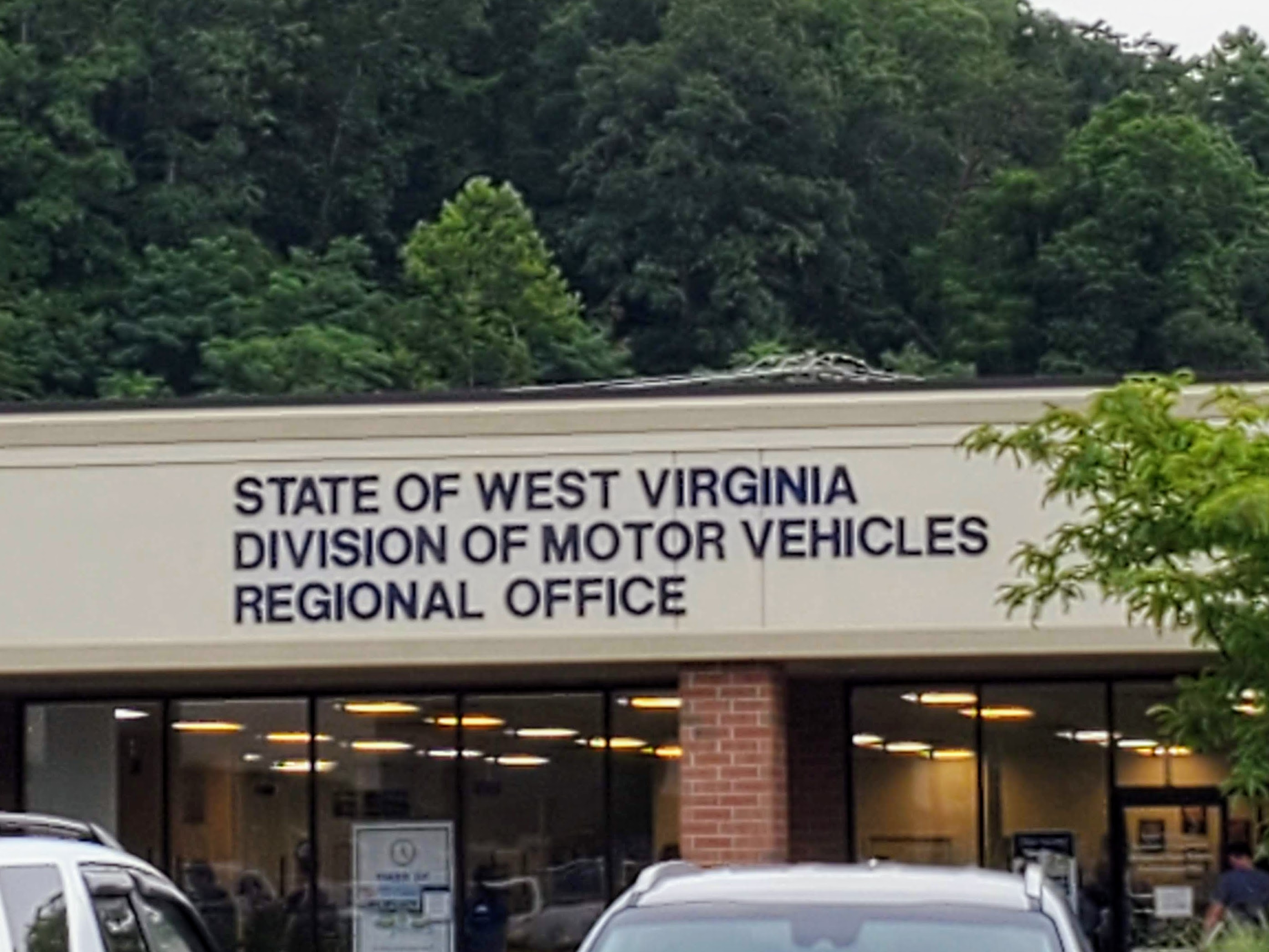
This past Friday, I had a 9:00 appointment at the Department of Motor Vehicles. When I arrived, there were 30-40 people already standing in a line that went out the door and down the sidewalk! But because I had scheduled an appointment, I was able to walk past all of them to stand in a line designated for “Appointments Only.” As the next clerk became available, a couple from the regular line started to walk in front of me toward that window; the clerk told them to go back in line and invited me up instead. I was then moved swiftly through the license renewal process, and I was back on the road with my new license in under fifteen minutes.
I had mixed feelings about all of this…
In one way, I felt that I deserved this special treatment. I had tried to schedule my appointment back in May, when my license was about to expire. The DMV website strongly recommended making an appointment because of Covid-19 and social distancing restrictions. Their first available appointment wasn’t until July 8th, so I reserved that one. When that day finally arrived, I received a call that the computer system was down and I needed to reschedule! I then took the next available time, July 19th. On that morning, I actually went all the way to the DMV and was told that the computer system was down AGAIN. I had to return home and wait for someone to call with a new appointment.
So on Friday, I felt that my privilege of ease and efficiency was merited and deserved.
In another way, I felt uncomfortable with my priority treatment while all these people continued to wait in line. I wanted to shout, “Hey folks, I had a tough time getting to this point, too; I am with you!” If I am honest, I also felt uncomfortable with the way I inwardly felt proud, wise, and gleeful about my privileged treatment. I thought to myself, “Hey folks, see how easily this is done? Make an appointment!”
The root of my discomfort was that I didn’t want to be considered privileged when I had merited this moment…
The recent Five Minute Friday prompt (see FIVE MINUTE FRIDAY: DRIVE ) was my invitation to pay attention to God’s movement at the DMV that day. So later, I contemplated these mixed emotions and began to realize the ways I am privileged. I have had so many undeserved advantages that led to my experience of special treatment.
For example, I have internet service in an area where the hills or poverty often keep others without service. I am able to read, I have the knowledge of website navigation, and I have a cell phone to receive notice of cancelations. I have the freedom of a flexible time schedule that can accommodate appointments. We have the financial ability to pay our property tax and the cost of my license. I have a car to drive to the DMV, and the health to walk in. I even had fearful but caring parents and a cranky driving instructor who taught me to drive those years ago.
The people waiting in line could have easily perceived me as privileged, and they would be right.
~~~~~
Here are my invitations for this week. Do they resonate with yours?
Though there will always be inequalities and unfair advantages, what can I do to enable someone to have a better chance for a better life? How might I use my advantages and abilities in service for others?
Can I celebrate my small victories without forgetting those who helped me along the way? Can I remain humble, knowing that others could celebrate the same successes under different circumstances? How might I refrain from feeling entitled?
Might I respond, “I don’t deserve this!” for my blessings as readily as I do for my hardships?
Do we merit God’s goodness simply because God calls us beloved, and so regards all of us worthy of goodness and blessing? How might I help God bring that goodness to others?
What small miracles and movements are you noticing this week?
My prayers for you continue.
~~~~~
A few hours before posting this blog, I read this…
“Everything that we have and do and are and accomplish is because of God’s immense love for us and empowerment of us.”1
And once again, I marvel at the goodness of God in these small daily miracles.
~~~~~
*Definitions from Dictionary.com
1Rubietta, Jane. Resting Place – A Personal Guide to Spiritual Retreats. Downers Grove: InterVarsity Press, 2005. Paperback.
Photo by Karen, Winfield, WV
FIVE MINUTE FRIDAY: DRIVE

Our word prompt for today’s Five Minute Friday, DRIVE, is especially timely for me, as Jim and I just drove back home to West Virginia after visiting our daughter and grandsons in Ohio…
We actually enjoy our four-hour drive. We love to watch the landscape gradually evolve from wide-open fields to rolling hills. We pack a cooler of snacks of fruit, nuts, cheese, crackers, and sparkling water to refresh us. We stop along the way to stretch a bit. We listen to music or podcasts, we talk about life, and sometimes we sit in comfortable silence, deep in our own thoughts.
Today I am noticing how life is like the drive home. There are times when life feels wide-open with possibility, when we can clearly see the way ahead. We drive with ease, enjoying the spacious scenery and the camaraderie. Then there are times when we have to pay close attention to what is directly before us, as we clutch the steering wheel and silence ourselves to navigate construction zones, accidents, or blind curves.
The landscape of our life journey is ever evolving, ever changing, too. There are times when we feel the freedom and ease of clear and wide routes. There are times when we struggle to navigate the next mile. Wherever we are on this road of life, we have a Companion for our journey. We have One who offers us refreshment for our spirits, rest for our souls, and guidance for our routes.
We have One who helps us find the often unexpected but delightful beauty in every changing scene.
Side note: I am writing this post early, because I have a 9:00 appointment at… the Department of Motor Vehicles! I am finding a special God-synchronicity in the timing of this prompt. More about that on Monday…
(Five Minute Friday is an online writing community. Each week, Kate gives us a one-word prompt and five minutes to write. You may find other posts or add your own at the link above!)
NOTICE AND DISCOVER – POWER

(NOTICE AND DISCOVER #3)
Monday, July 26th
I felt a little ridiculous taking this photo. I didn’t understand why I would be so prompted; I had very little idea of what this cylinder even was. I only knew it had a purpose, obviously something to do with electrical power.
But as I continued my walk, I began thinking about the ways we continue to learn and grow throughout our lives. As I keep learning, I realize I have much more to learn! There are times when I read old blog posts and want to rewrite some of them, because of new insights I have gained since then. I began to see this cylinder as a humbling symbol to remind me that I still have much to learn; that I will not always be right; that I should seek every opportunity to become better informed.
My thoughts went deeper then… into the great mystery of God. God is so awesome, infinite, and beyond our understanding, that to try to describe God is to limit God. Could we ever truly envision or fully know God?
When I arrived home, I looked up information about this type of electrical cannister. I learned that this is a transformer; its purpose is to lower the high voltage coming from the main long-distance power lines into the voltage we can use in our homes.
Suddenly I thought, “This is how God works!” The power of God would be too much for us to comprehend or take in, but God transforms this power and love into ways we can absorb and understand. God’s love is transformed for us through Jesus. Through the Word and words. Through the Spirit. Through our faith and experiences. Through creation.
Even through gentle nudges to take photos.
With this thought, there came another parallel idea. How often do we take for granted the electricity that provides our homes with light, warmth, coolness, and other helpful comforts? When we turn on a light, we don’t hear electricity say, “You have me to thank for this!” Never once have I said, “Thank you, electricity, for cooling me on this hot day.” We may appreciate what we notice – such as the light and the comfort – while not giving much thought about the power supply that enables them to bless us.
How often do we do this with God? Do we appreciate our gifts, but not always the One who provides them?
God is always moving, always supplying us with power for every need, always enlightening, always warming our hearts and refreshing our souls. God’s incredible power has been transformed into quiet, subtle, softer ways that we can comprehend and embrace. Oh, there may be lightning bolts once in a while! But God chooses to humbly become small so that we might glimpse and know God’s incredible love in the ways we can comprehend.
Soon after I took this photo and began pondering these thoughts, I listened to another podcast episode of “Learning How to See.” I heard Brian McLaren say this:
We do not see everything so we do not know everything. We do not even know how much we do not know. Nor do we know how much of what we know is actually impartial, distorted or false. That is why we seek to
open our eyes to encounter the world afresh in humility and in silent wonder to learn to see.1
This was another small God-miracle – these additional thoughts supplemented my first observations, again reminding me that I am to be attentive and to humbly remain a learner in all things!
~~~~~
This week, is my invitation first of all a reminder that I still have much to learn? Am I being invited to ask for both wisdom and humility in my prayers? How might I pay better attention to the lessons God is revealing? How might I be more aware and grateful for God’s power all around and within me?
Perhaps more importantly, how does God want to transform me into a lesser conduit of God’s power? How might I serve as a small, humble vessel of God’s infinite love, for others to more readily receive?
Do these questions resonate with your soul this week? Where are you noticing God’s daily miracles?
My prayers for you continue.
1Boxes Inside Boxes — Center for Action and Contemplation (cac.org)
Photo by Karen, Hurricane, WV
Thinking about the ways we learn and grow, you may be interested in my husband Jim’s interesting and humorous new blog: Ruminations of an Ultracrepidarian – Observations and Opinions about Life and Faith (who-asked-me.com)
FIVE MINUTE FRIDAY: ORDER

We make a good team. Jim loves a clean house with sparkling bathrooms and shiny floors. I love an organized house with tidy closets and little clutter. When everything is clean and organized, our home serves as our sanctuary; we find refuge from the chaos or messiness of life that can sometimes surround or overwhelm us. Today’s prompt, ORDER, makes us smile!
And yet, as people of faith we are called to journey into this world, to confront the messes, to restore the brokenness, to face the chaos, to serve one another, and to do all the good we can. As tempting as it may be to seclude ourselves in our safe and secure – and orderly – home, we know that abundant life is much more than that.
Where can we find our sanctuary, our refuge as we are out in the world?
We can order our days with prayer, practices, and presence. We can keep Christ as our centering point. We can seek the kingdom amid the mess. We can take time for those sanctuary moments, to rest and reflect, to replenish and regroup. We can ask for peace, strength, patience, and joy for our journey.
We can trust that the One who has created and ordered the infinite universe can surely order our days.
(Five Minute Friday is an online writing community. Each week, we are given a one-word prompt and five minutes to write. You may find other posts or add your own at the link above!)
NOTICE AND DISCOVER – NARROW ROAD
(NOTICE AND DISCOVER #2)
Monday, July 19
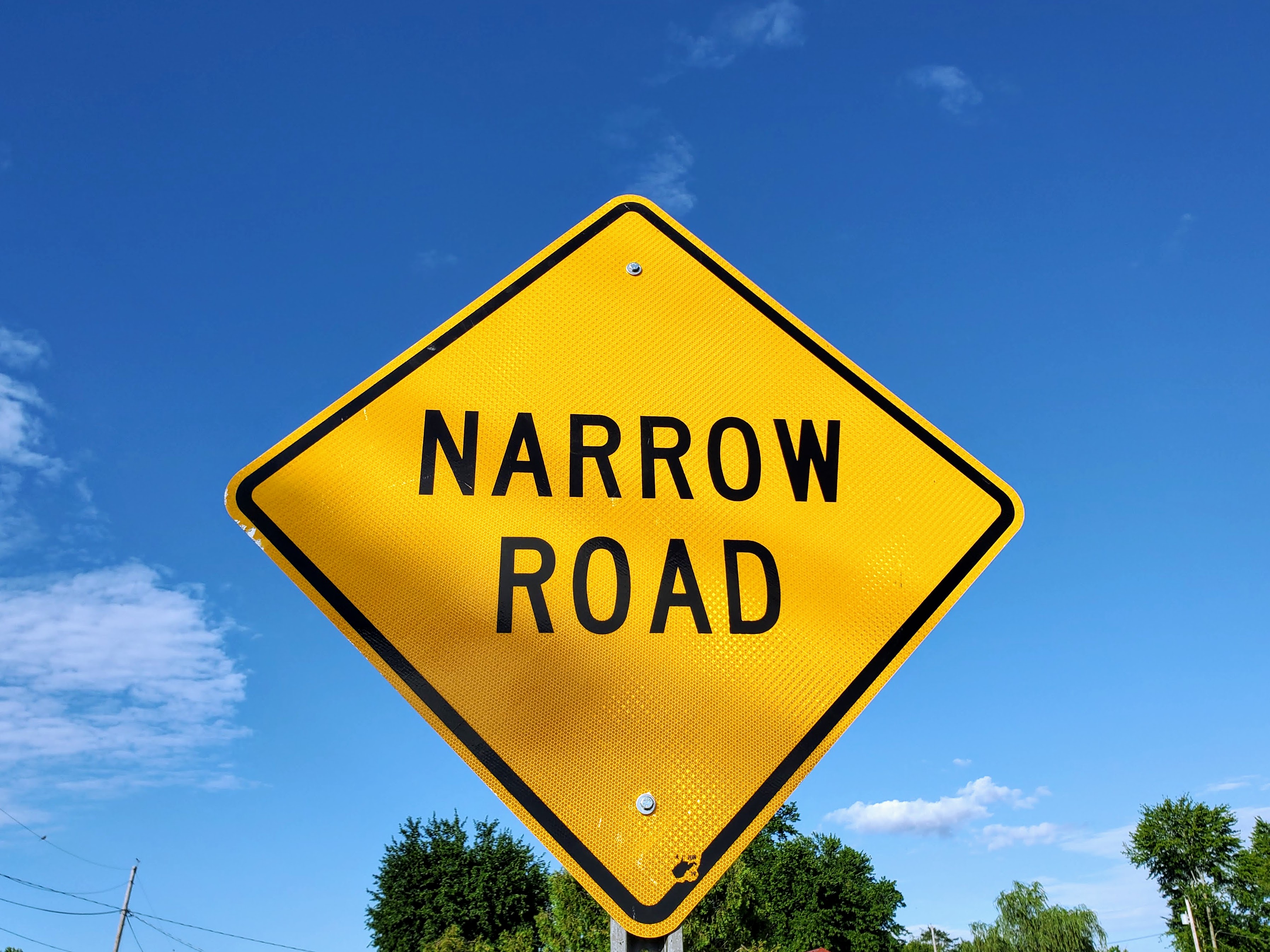
I actually went past this sign as I walked along in the morning sunshine, but further down the road, I was suddenly nudged to take a photo of these words. Turning back, I snapped the picture – and was surprised by a flood of enthusiasm and inspiration! I then knew that this is the theme I was to notice this week. And each day, I found messages that enhanced or deepened this narrow road idea. I regard these as small miracles of God, discovered only because I was prompted to notice.
My initial thoughts went to these familiar words of Jesus in the book of Matthew:
Enter through the narrow gate, for wide is the gate and broad is the way leading to destruction and many are the ones entering through it. How narrow (is) the gate and constricted the road leading to life and few are the ones finding it. (Matthew 7:13-14, from the Interlinear Translation from Greek to English)
There was a time when I interpreted these words as an instruction to follow all of the strict rules found in the Bible in order to get into heaven. If I strayed from the narrow road, I would end up in hell! But the more I know and love about Jesus, the more I see this narrow road as the way of truth, of kingdom living here and now. Our road is not made narrow by boundary walls of rules and stipulations, but by keeping our focus on Jesus and allowing him to lead the way.
Jesus comes to free us, to give us abundant life in him, to open us to love and goodness. Instead of walking in fear, we can hold his hand in childlike trust as we follow this narrow road. The road is not a difficult one of self-striving, but an invitation to greater things, to joyful and abundant life. We can stop worrying about achieving perfect righteousness as we trust the Spirit to work within us.
A few days later, @chasinggraceinsta posted a beautiful photo on Instagram with the caption, “Spirit lead me where my trust is without borders.”
Amen, and thank you, God. The road may be narrow – but may our trust be expansive.
Finally, this idea was extended further by yet another small God-moment. Jim read our next devotional reading from We Make the Road by Walking called, “A New Path to Aliveness,” (wow! 🙂 ). Brian McLaren writes about Jesus’s message in Matthew 5:17-48:
Jesus employs his “you have heard it said… but I say…” pattern once more, perhaps the most radical example of all. Tradition always requires love and responsibility toward friends and neighbors, people we like, people like us, people “of our kind.” That is a big step beyond utter selfishness and narcissism. But Jesus says the road of tradition was never meant to end there. Love should be extended farther than before, to outsiders as well as insiders, to “them” as well as “us,” even to our enemies. We may not have walked the road that far yet, but that is God’s intent for us… God is out ahead of us, calling us forward – not to stay where tradition has brought us so far, and not to defy tradition reactively, but to fulfill the highest and best intent of tradition, to make the road by walking forward together.1
Our narrow road is the road of love. Following Jesus on that narrow road, we keep walking further into his love, and further into our love for one another. We seek ways to love and serve others well, to be Christ for them in our words and actions. Thanks to Jesus, what a beautiful road this narrow road can be! It truly is the road “leading to life.”
What are the invitations this week? How might I follow Christ more closely, trust him more fully, love him more deeply? Can I learn to look to God for my truth rather than comparing myself to the standards and expectations of the world? Where might I narrow my focus in order to expand – is this an extension of last week, am I being called to live more simply, to see God’s glory in the everyday? What things do I perceive as limits that keep me from expanding in Christ? How might I expand in love?
Are these questions yours, too? Or have you noticed something else this week? What are you discovering in your noticing?
My prayers for you continue.
1McLaren, Brian. We Make the Road by Walking. Jericho Books, 2014.
Photo by Karen, Hurricane, WV
FIVE MINUTE FRIDAY: STRONG

Let me be strong in you, God.
Let my strength come not from striving
but from centering
in you.
Let my strength come not from pushing
but from placing
myself in your hands.
Let my strength come not from grit
but from your grace
alone.
Let my strength come not from power
but from the peace
only you can give.
In this strength, I pray…
to refrain from reacting with hurtful words or actions
to return kindness and gentleness in the face of hostility
to walk gently as a steward of this earth
to stand firm in times of trial
to seek understanding in conflict
and to know when to speak or remain silent.
Amen.
(Five Minute Friday is an online writing community. Each week, we are given a one-word prompt and five minutes to write. You may find other posts or add your own at the link above!)
NOTICE AND DISCOVER – WILDWOOD
(NOTICE AND DISCOVER #1)
Monday, July 12
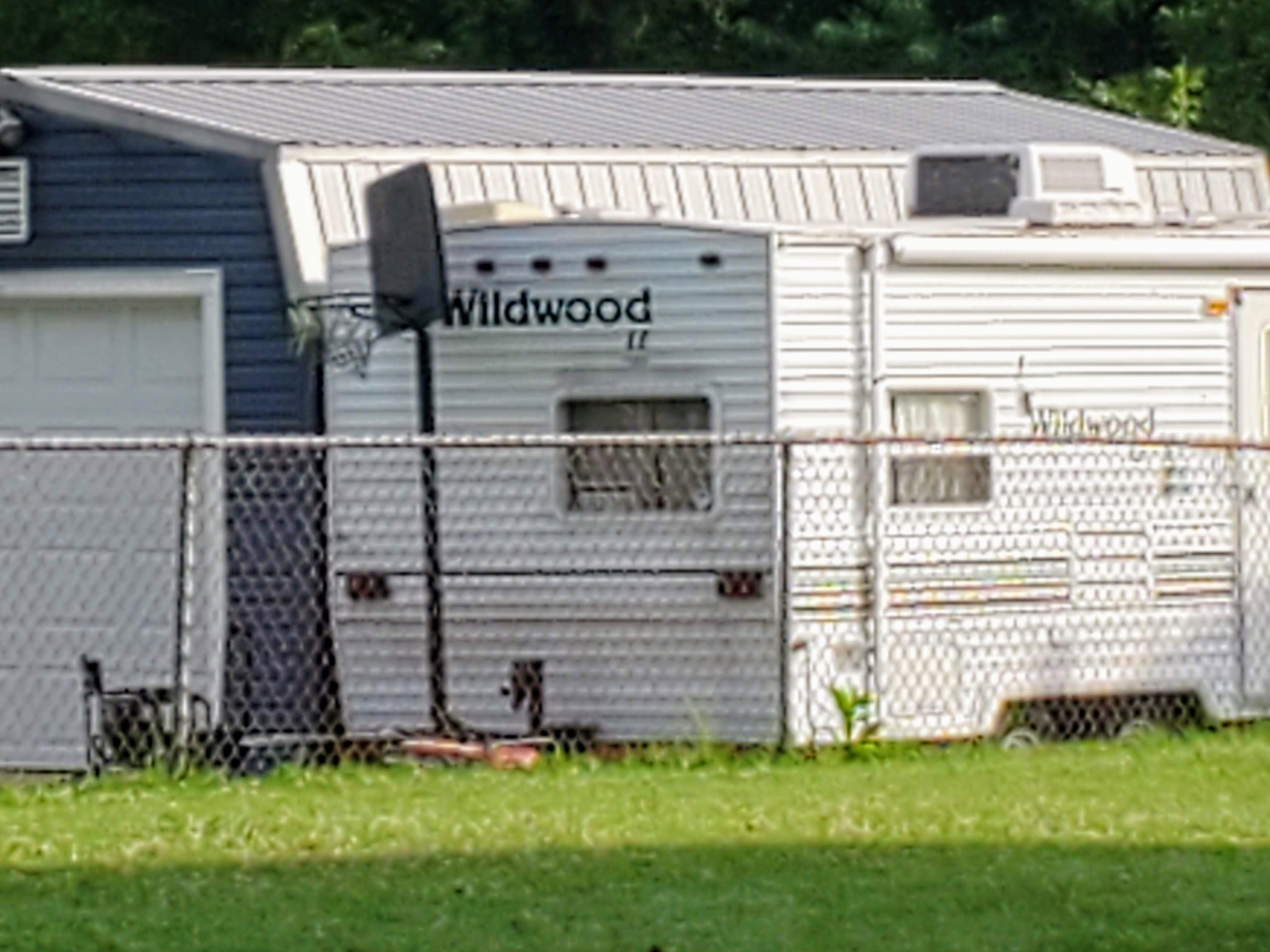
On the first day of my “notice and discover” practice, this word – Wildwood – caught my attention on my morning walk. Thoughts and memories of Wildwood Metropark in Toledo immediately came to mind. My friend Nancy and I walked the paths at Wildwood quite often when we lived in the area.
Nancy and I met every other week to hike and talk about life. We sought to make our time together a spiritual one; we often talked of our joys and sorrows, shared the ways we felt God was moving in our lives, and then held each other in prayer until our next hike. We walked in comfortable and comforting companionship through some very difficult trials. We uplifted one another by speaking words of encouragement, and at times, by pointing out a particular gift of nature, such as a bird, a flower, or a special scene we had noticed. In every walk, through every season, we always felt the goodness of God. I would come away inspired and renewed from our time together.
As I reflect on this now, I realize that Wildwood became so much more to me than a lovely park. I will always regard Wildwood as a God-created sanctuary, set apart in nature’s beauty, a holy and sacred space, a place to reconnect with a dear friend and God.
And this past weekend, Jim and I watched two documentaries – “Arctic Daughter” and “ReWilding Kernwood” – that deeply touched our souls. Jean Aspen and Tom Irons share their experiences of living in the remote Brooks Range of Alaska. They narrate their family’s story with gentle, peaceful voices; soft piano and violin music plays in the background; the photography captures the incredible beauty of the Arctic; and their wise and tender way of living is inspiring us to live more simply, to appreciate and tend the earth, and to savor and embrace life for all it holds. Jim and I were so moved, deeply touched by the beauty and the message, that we often had tears.
I notice that God is repeating this theme for me; I am to keep paying attention. My longing for the spirituality and sanctuary found in nature has been profound in recent months. Hiking feeds my soul, God feels so close when I am outdoors. These beautiful times in God’s creation are inspiring my reverence and awe, becoming my holy spaces for this time in my life.
For today, my discovery is the reminder that all of creation is holy and to be revered. When we look at the beauty of the world through our spiritual lens, when we seek the kingdom here and now, when we see all of life as sacred and regard it with gratitude, the whole earth becomes our sanctuary.
Through this discovery, what invitations is God extending? Am I being called to live more simply? To spend more time, feed my soul in nature? To be a better steward of our earth? To see God’s glory all around me? To move with the seasons and the passing years with the same grace and dignity that nature displays? These questions will be my invitation for further reflection this week.
Is this discovery resonating with your soul today? Are these questions also an invitation for you? Or will you notice something else this week? My prayers will be for your awareness and discernment.
Photo by Karen, Hurricane, WV
NOTICE AND DISCOVER – INTRODUCTION
Jim and I have been reading Brian McLaren’s excellent book, We Make the Road by Walking, for our daily devotions. One of our recent morning readings (“Significant and Wonderful”) has really impacted me. Brian writes about the miracle stories in the Bible – such as Jesus changing water into wine – noting that some people will believe these stories, and some will not. But he then offers us a third option…
“We could ask another question: What happens to us when we imagine miracles happening?” Brian adds, “Perhaps a miracle story is meant to shake up our normal assumptions, inspire our imagination about the present and the future, and make it possible for us to see something we couldn’t see before.” He continues by saying that miracle stories “stir us to imagine new ways of seeing, leading to new ways of acting, leading to new ways of being alive.”1
For the rest of these summer weeks, I hope to take this idea and apply it to my everyday life, by seeking the deeper meaning or significance of the things I notice. God is always present and moving, but I know that I am not always paying attention. There may be miracles all around, yet I am missing them by expecting the mundane. When I am able to be more attentive to God, I begin to notice patterns and repeated messages that tell me God is at work and wants me to notice.
Each week, I will ask the Spirit to keep me aware and present, to help me notice what I should. Then, on my morning walks, I will take a photo of any scene, object, or image that draws my attention. In my quiet time, I will prayerfully and contemplatively reflect on that image, asking what God may be teaching me or revealing to me through it. And – if you would be blessed to do so – I hope you will join me! Each Monday, I will share what I have discovered, and offer some invitations for your own contemplation (I would love to learn what you have noticed, too).
May we all learn to be more vigilant and attentive to God in our daily lives, and in doing so, may we be surprised and assured of God’s constant presence and loving care for us. And may we begin to see our own daily miracles – to see the ways our extraordinary God is working through our ordinary days.
1McLaren, Brian. We Make the Road by Walking. Jericho Books, 2014.
Photo by Karen, Hurricane, WV.
FIVE MINUTE FRIDAY: SUMMER

I believe I am finally shedding my cocoon of protection created during the cold, harsh realities of a winter season that lasted far too long. These summer days have warmed my soul, brightened my outlook, and inspired me to begin living and growing again.
But will I emerge from this cocoon as the same person who formed and entered it? Or will I have been transformed in some way?
I’m writing this on my back porch, looking upon green forested hills, listening to birdsong and hummingbird wings, feeling cool morning humidity against my skin, savoring the aroma of my hazelnut coffee, immersing myself in my thoughts, and being overwhelmed with gratitude for this day.
Yes. This liminal time in the cocoon has made my vision clearer, my appreciation deeper, my heart softer. My protective cocoon has been left behind, and new, vulnerable skin has been exposed; skin that may be more sensitive to wounds, but skin that yearns to embrace all of life with loving hope and gentle tenderness.
May I now develop wings to fly, God, that I may flutter with your wind, alight on your creation, and softly touch others with your incredible goodness.
(Five Minute Friday is an online writing community. Each week, we are given a one-word prompt and five minutes to write. You may find other posts or add your own at the link above!)

