Simply Soul Searching
HOW IS GOD LOVING ME – AND WHERE IS GOD LEADING ME?
FIVE MINUTE FRIDAY: DESERVE
Keep me, God,
from trying to make sense of our world
by dividing it into tidy categories
according to what we deserve.
Keep me, God,
from deeming who is worthy or unfit,
from judging who merits your goodness
and who should be denied it.
Keep me, God,
from separating your love and call
according to my joys and trials,
for your goodness shines through all.
Help me, God,
to divide only the word, deserve,
and choose to live with gratitude and grace,
my focus solely on serve.
(Five Minute Friday is an online writing community. Each week, we are given a one-word prompt and five minutes to write. You may find other posts or add your own at the link above!)
PRODUCE GOOD FRUITS
(A SEASON OF NEW GROWTH #12)
Wednesday, June 30th
My Father is glorified by this,
that you bear much fruit and become my disciples.
(John 15:8 NRSV)
As we finish this series today, let’s think about the final goal, our desired outcome from nurturing our healthy spiritual growth: producing good fruits in abundance. In order to reach this end, we need to keep tending and maintaining our growth, by watching our progress and addressing any needs that arise.
When it comes to fruit trees, there is always more to learn. So many people assume that growing fruit trees is easy. You just plant your tree, water it, and wait for the harvest. The truth is that once your tree is in the ground there still is some work to do to keep it healthy. Make an effort to learn the key fruit tree care skills – including how to evaluate your site and research your trees, correct planting and young tree care, winter and summer pruning, pest and disease prevention, and soil and nutrition management. What you will discover is that the better you care for your trees, the more they will give back to you – by providing you and your family with an abundant harvest that you can enjoy for many years to come.1
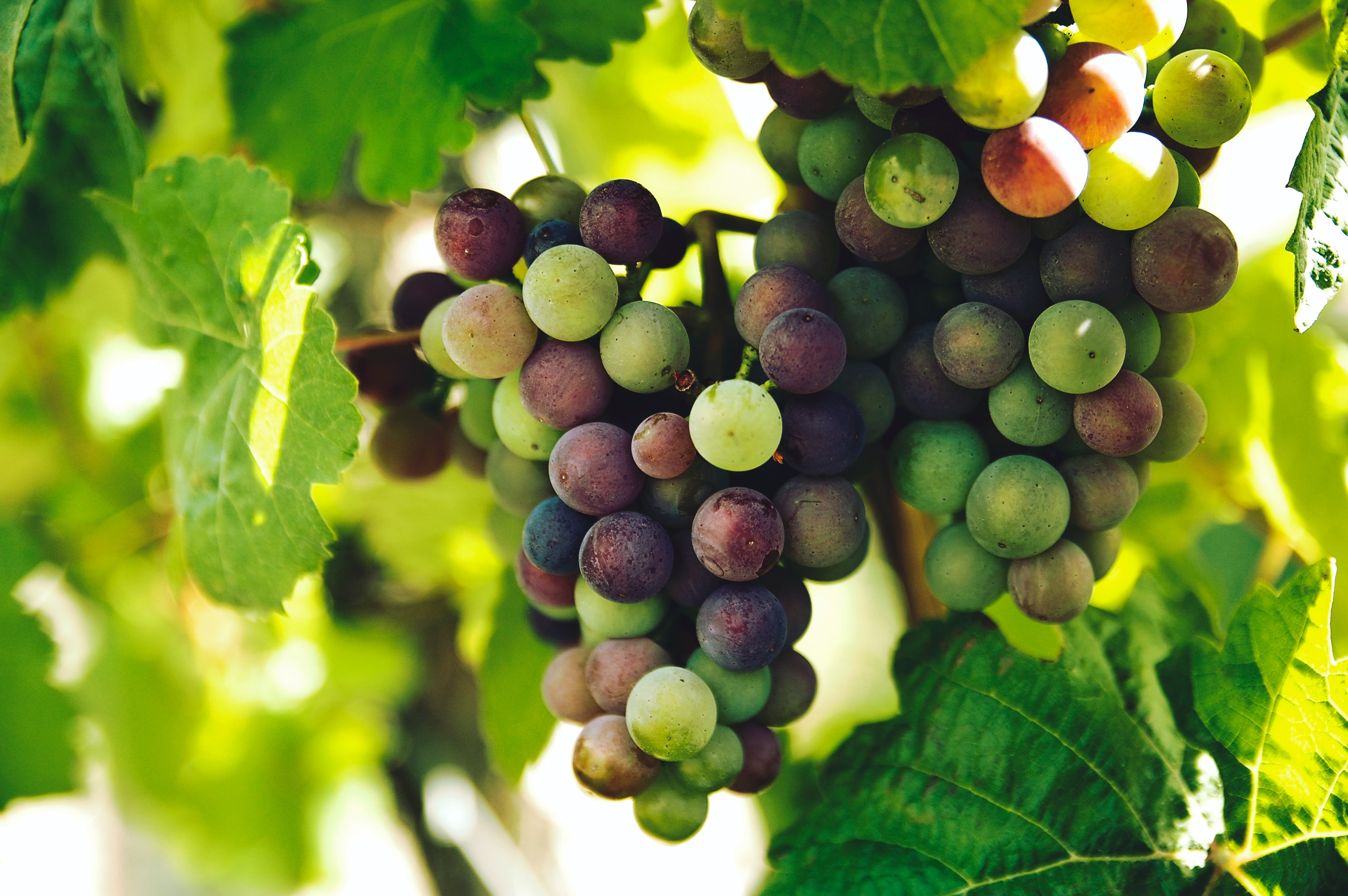
How do we tend and maintain this healthy growth that produces good fruits in abundance? In John 15:5, Jesus describes himself as the vine, and us as the branches connected to him. As a “branch,” we can look two ways for the guidance and support needed to produce good fruit.
We can look to the fruit.
What are some of the good fruits that come from growing in faith? Here are a few…
By contrast, the fruit of the Spirit is love, joy, peace, patience, kindness, generosity, faithfulness, gentleness, and self-control. (Galatians 5:22-23 NRSV)
Finally, beloved, whatever is true, whatever is honorable, whatever is just, whatever is pure, whatever is pleasing, whatever is commendable, if there is any excellence and if there is anything worthy of praise, think about these things. (Philippians 4:8 NRSV)
By this everyone will know that you are my disciples, if you have love for one another. (John 13:35 NRSV)
Holding before us the desired end result, the good fruit, helps us to persevere with our purpose and direct our growth. We tend our growth by asking discerning questions as we make choices and take actions. What will be the result of the actions we take today? What sort of fruit will result? Does this decision lead to increased love for God and one another? Will this action draw people to God? Am I serving God honorably and excellently? Am I being patient, kind, and generous today?
At the end of the day, will I have made progress in growth toward all of these good fruits?
We can look to the source.
Most of all, we can produce good fruits by looking to and remaining attached to the vine, by abiding in Christ himself.
My Father is glorified by this, that you bear much fruit and become my disciples. As the Father has loved me, so I have loved you; abide in my love. If you keep my commandments, you will abide in my love, just as I have kept my Father’s commandments and abide in his love. I have said these things to you so that my joy may be in you, and that your joy may be complete. (John 15:8-11 NRSV)
When we remain attached by abiding in Christ, when we keep his commandments to love God and one another, our fruits will be the natural outflow of that abiding. I have heard it said that couples begin to look more alike the longer they are together. May we develop such a close and loving relationship with Jesus that we begin to look more like him.
How might we do this? We can remind ourselves of his life and love by reading the Gospels. We can ask the Spirit to guide and reveal all that is of him. We can pray to him, seek to follow him, die to ourselves, and love him fully with a life of loving service. We can become the love of Christ in the world by letting his love flow through us, resulting in abundant and beautiful fruit.
Then at harvest time, may Christ find that we have all grown together into one beautiful garden, bursting forth with great joy – because his joy will be in us, and our joy will be complete (vs. 11).
Photo by Rohit Tandon on Unsplash
BLOSSOM IN BEAUTY

(A SEASON OF NEW GROWTH #11)
Monday, June 28th
For it was you who formed my inward parts;
you knit me together in my mother’s womb.
I praise you, for I am fearfully and wonderfully made.
Wonderful are your works;
that I know very well.
(Psalm 139:13-14 NRSV)
For we are what he has made us, created in Christ Jesus for good works, which God prepared beforehand to be our way of life. (Ephesians 2:10 NRSV)
In this past year I have grown to love podcasts! I love the convenience of learning, laughing, or being inspired while I am walking or driving. With the popularity of podcasts increasing, I began to consider offering a podcast of my own, one in which I could talk about my blog post for the day. There only seemed to be one drawback.
My voice.
I don’t have a gentle, soothing voice, or a lilting, lovely one. Nor do I have a clear, majestic voice, or an elegant, mellow one. My voice has always been a bit raspy at times, and the hoarseness has worsened with age and earlier chemotherapy treatments. My voice is also soft – I cannot yell – and it falls in a vocal range that is especially difficult for those with hearing loss to absorb.
Years ago, I even joined a group that developed public speaking skills. I was soon told that I spoke too nasally, and was advised to open my throat when speaking. Well, this “helpful” suggestion only made me more nervous, and my throat closed up so much that it seemed my nose did most of the talking! And then there is this story: a bemused teen in my youth group once told me that when I spoke, my tongue clicked against my teeth and I sounded like a chipmunk.
And so I write. 😀
(I hope that brought a laugh today…)
Today’s reflection is to Blossom in Beauty, but our invitation is to blossom with our own unique beauty. When I think of this type of blossoming, dear Therese of Lisieux comes to mind. She has been called “The Little Flower” because of her selfless, humble, and truly beautiful way of living:
Therese is most known for her “Little Way.” She spoke not of doing great things, but of small things with great love. She saw herself as a child who lived in complete dependence on God. Therese acknowledged her littleness and believed this showed more clearly God’s greatness. She once said, “If all the lowly flowers wished to be roses, nature would lose its springtime beauty.” Therese saw herself as a tiny flower in the garden of God and believed His power shone more clearly through her weakness.1
When we live as our best selves according to the way God has created us, our beauty may not radiate from the features or abilities we wish we had; yet each of us has been created uniquely and beautifully in God’s eyes. We have been given special gifts and strengths to contribute to the diverse beauty of all creation. We cannot be or do everything, but we can strive to be what God has made us, “created in Christ Jesus for good works.” Like Therese, we can trust that the beauty of God’s power will shine through our weakness. We can blossom in the beauty of love alone.
What is your unique way of bringing beauty to God’s world? How might your weakness be a way for God to create a different beauty of God’s making? How will you blossom through the beauty of God’s love in your life?
May we remember that our unique beauty is best revealed when we let God’s beautiful love outshine our imperfections, while we focus on doing those “good works, which God prepared beforehand to be our way of life.”
1Saint Therese of Lisieux: God’s Little Flower – My Catholic Kids
Photo by Karen, Hurricane, WV
FIVE MINUTE FRIDAY: QUIET

Our youth group was large and loud, but my voice was not. So when we needed to have their attention, one of us leaders would yell, “God is good!” Those nearest us, the ones who could easily hear our words, would reply, “All the time!” Their additional voices would then be loud enough to get the attention of the rest of the group.
However, as time passed, I noticed that our “God is good” proclamation often became not a grateful exclamation of praise, but an exasperated way of scolding, “Shut up!” Glaring faces would look to the noisy ones and yell, “God is good!” with such frustration that it seemed our words were merely an intimidating tool used to silence them.
Our word prompt for today is QUIET. We are called to quietness by having a gentle spirit, by serving in selflessness, by refraining from hurtful words, and by stilling our souls to listen. When the world gets noisy with anger or frustration or conflict or anxiety, we are called to be agents of this quiet peacefulness. And we can begin by remembering how good God is.
God IS good, ALL the time. How we choose to reveal and express this truth will make a difference.
(Five Minute Friday is an online writing community. Each week, we are given a one-word prompt and five minutes to write. You may find other posts or add your own at the link above!)
PRUNE THE NONESSENTIALS

(A SEASON OF NEW GROWTH #10)
Wednesday, June 23rd
He has told you, O mortal, what is good;
and what does the Lord require of you
but to do justice, and to love kindness,
and to walk humbly with your God?
(Micah 6:8 NRSV)
How often have you entered a room only to wonder, “Now why did I come in here?” I do this quite often – and even more so as I age! I forget my original intention because I am distracted by other needs or preoccupied by other thoughts. Sometimes I must return to the previous room so I can recall my original purpose. Today’s reflection helps us to keep our best purposes and spiritual intentions flourishing and focused by pruning the nonessentials.
Before we begin pruning, we are wise to first discern what our life essentials include. The isolation of the past year has helped me to rediscover a few of my essentials; I gained a deeper appreciation for family togetherness, a greater awareness of my need to write, a more spiritual connection through my daily walks, and even a stronger preference for eating healthy dinners at home. Once we understand what matters most to us – and to God – we can begin to prune the nonessentials to make more space for the essentials.
In his book, Essentialism: The Disciplined Pursuit of Less, Greg McKeown describes essentialism as “a whole new way of doing less, but better, in every area of our lives.” He shares an example of a busy executive who considered each request for his time by first asking himself, “Is this the very most important thing I should be doing with my time and resources right now?” Greg advises, “Only once we discern what is absolutely essential and eliminate everything else can we make our highest possible contribution toward the things that truly matter.”1
For some time now, I have been writing a book about the ways I feel God’s love and presence in my life. The book was intended to simply be a gift, a memoir, for my family and friends. But as I took steps to learn more about writing and publishing, I forgot my original purpose. I began to concern myself with building a larger following, finding ways to promote my writing, and reading every marketing resource that caught my attention. These tips and resources are helpful, but they took time and attention away from the writing itself! Soon my book project began to feel overwhelming and intimidating – no longer an outpouring of thoughtful reflections from my heart – and I stopped writing. Only when I finally returned to “the previous room” of my original intention, did I remember the “why I came in here” and found the joy of writing again.
The article, Benefits Of Pruning For Healthy Plant Growth | ABC Blog (abchomeandcommercial.com), tells us that “Proper pruning improves the health and beauty of plants, thereby increasing their lifespan and productivity.” Some of the benefits listed were improved plant health (by removing dead, diseased, damaged or dying branches and stubs), enhanced plant growth (when the main shoot is pruned, the growth of other shoots is encouraged), and enhanced beauty of a plant (pruning helps develop healthy flowers and colorful young shoots).
When we take the time to prune our nonessentials, we help foster our own healthier, stronger, and lovelier lives. As we pursue the goal of being who God created us to be, of doing what God created us to do, we might be offered many good paths to follow. For our healthy spiritual growth, we are wise to prune our choices to the best few, always making our first priority “to walk humbly with God.”
Our pruning can begin with a time for spiritual reflection, a time to prayerfully consider what is essential for our faithful living. We can then let those essentials guide our responses to each new invitation. We can ask ourselves, “Is this the best choice for now?” We can prune some of the helpful but less essential tasks by limiting our time with them (for example, I can concern myself with publishing for one hour each week). On the other hand, we can assign definite schedules for our essentials (I will write 500 words every Tuesday). Most of all, we can ask the Spirit to guide our ways and to reveal what is essential for living each day.
As we prune our nonessentials in this Season of New Growth, may we each find a greater clarity of purpose that will guide us to a life of simple – but meaningful – abundance.
1McKeown, Greg. Essentialism: The Disciplined Pursuit of Less. New York: Currency, 2020. Print.
Photo credit: shrub-pruning.jpg (1256×835) (gardeningknowhow.com)
WEED WHERE NEEDED

(A SEASON OF NEW GROWTH #9)
Monday, June 21st
“Do not store up for yourselves treasures on earth, where moth and rust consume and where thieves break in and steal; but store up for yourselves treasures in heaven, where neither moth nor rust consumes and where thieves do not break in and steal. For where your treasure is, there your heart will be also.” (Matthew 6:19-21 NRSV)
I learned something new about weeds in my gardening research: They aren’t all bad!
In the article, An Ecological Understanding of Weeds | eOrganic, I discovered that “weed growth is a healing response to land disturbance after either natural disaster or human activity leaves the soil vulnerable to erosion or degradation.” Weeds “protect the soil from erosion, replenish organic matter, feed and restore soil life, absorb, conserve, and recycle soluble nutrients that would otherwise leach away, absorb carbon dioxide from the atmosphere, restore biodiversity, and provide habitat for insects and animals.”
Weeds are necessary and helpful for the health of our soil.
But the article then describes the problems that arise when weed growth continues unabated in a farm field or garden. A weed in itself is helpful for the soil, but too many weeds will hamper the healthy growth of crops or gardens.
As we think of our own healthy spiritual growth, what might our weeds be? Let’s think of our “weeds” as any of our blessings that may be useful or beneficial but – if left to grow unabated – can inhibit or prevent our best growth. We have been given a beautiful world to enjoy and steward. We have been given earthly treasures that are beneficial and even necessary. I believe God delights in our pleasure and enjoyment of the treasures we have received. But, as Jesus says in Matthew 6, troubles arise when we “store up” these treasures for ourselves. The gifts we have been given can turn into weeds when we make them our sole priority and focus.
The article notes several ways weeds will cause problems, and these relate to the weeds in our lives as well. When weeds become too abundant they begin:
Competing directly for light, nutrients, moisture, and space… Is the career we have been graciously given now requiring so much time and energy that we neglect our time with God? Are we distracted from God’s present goodness while we worry about our responsibilities or possessions?
Physically hindering crop growth and development… Have we become so focused on success that we have lost the joy of the work itself? Are we comparing ourselves with others more than discovering how God has uniquely equipped us?
Hosting pests or pathogens that may attack crops… Has our pursuit of material goods added to our financial stress and strain? How would simplifying our lives free up more time and space for rest and replenishment? Do we envy or copy what others have or do, rather than enjoy and appreciate our special lives?
Interfering with or contaminating crop harvest… Are the crops of our success riddled with broken relationships or frustrations? Are we able to yield truly abundant fruit or are we settling for “good enough” because we have been overwhelmed and depleted for so long?
Today is our day for a “weed review.” What gifts have become weeds in our lives? What will help provide more time and energy for our relationships with God and our dear ones? Where might we reduce our supply, release our pursuit, or relish what we already have?
As we learn to weed where needed, may we discover new growth in our ways, but also new joy for our days.
Photo by Jonny Caspari on Unsplash
FIVE MINUTE FRIDAY: LIFT

Uplifting God,
Oh, I thank you for the many times you have lifted me
from my burdens of sorrow, guilt, and worry!
How might I lift others in return?
Do I lift their names to you in prayer?
Do I raise my voice to speak for justice?
Do I pull them up with a helping hand?
Do I lead them toward a new tomorrow?
Or are you calling me to something more?
Inspire me to rid myself
of everything that is not of you.
Then place my emptied self beneath the hurting
and begin filling me with your goodness and love.
As I gradually expand with more of you,
may the hurting be gently uplifted
and may I remain the humble soil of your holy ground.
(Five Minute Friday is an online writing community. Each week, we are given a one-word prompt and five minutes to write. You may find other posts or add your own at the link above!)
WATER THE SOIL

(A SEASON OF NEW GROWTH #8)
Wednesday, June 16th
Jesus wept.
(John 11:35 NRSV)
She made her way through the desert of her soul
parched by pandemic, politics, and pain;
her chin held high, stoic and strong,
displaying her optimism as a banner of hope.
“God is our stronghold, our shield, our rock,”
she proclaimed, to those who yearned
for a soft and tender caress instead.
She held fast to her faith,
desperately clutching it to her chest
as moments, memories, and people she loved
were snatched from her embrace.
“The Lord is near to the brokenhearted,”
she publicly professed
while she inwardly wondered,
“Will you forget me forever?”
And when the desert time was nearly over,
she paused to quietly grieve
the three who no longer walked this world.
A sudden tear surprised her…
then another and another…
soon the tears were pouring down her cheeks,
her thin veneer of peace now shattered
and every sorrow spilling through her fingers.
She grieved for herself
then for her dear ones
then for the world…
for the memories she would not make
for the losses she could not recover
for the lies and the lines
of hatred and division that form in dry times,
for walls and distances that separate
people from people, people from God;
and tears of grief flowed unabated
for doctors and daycares
for frontliners and families
for racism and riots
for police and people of color
for borders and babies
for violence and vaccines
for India and Italy
for countries and continents
for all places and all people.
Her fresh tears poured out –
but the dry, barren ground soaked in,
softening
refreshing
replenishing
becoming dark and damp soil,
cool beneath her weary feet.
She grieved and she placed
each sorrow into grace…
then, drained and depleted,
gently wiped her eyes
to find a tiny sprout of new life
breaking courageously
through fresh and fertile ground
and she smiled.
The soil of her soul was ready
to grow something new.
Bible verses quoted:
“The Lord is near to the brokenhearted.” Psalm 34:18
“Will you forget me forever?” Psalm13:1
Photo by Karen, Hurricane, WV
DEEPEN OUR ROOTS
(A SEASON OF NEW GROWTH #7)
Monday, June 14th
I pray that, according to the riches of his glory, he may grant that you may be strengthened in your inner being with power through his Spirit, and that Christ may dwell in your hearts through faith, as you are being rooted and grounded in love. (Ephesians 3:16-17 NRSV)
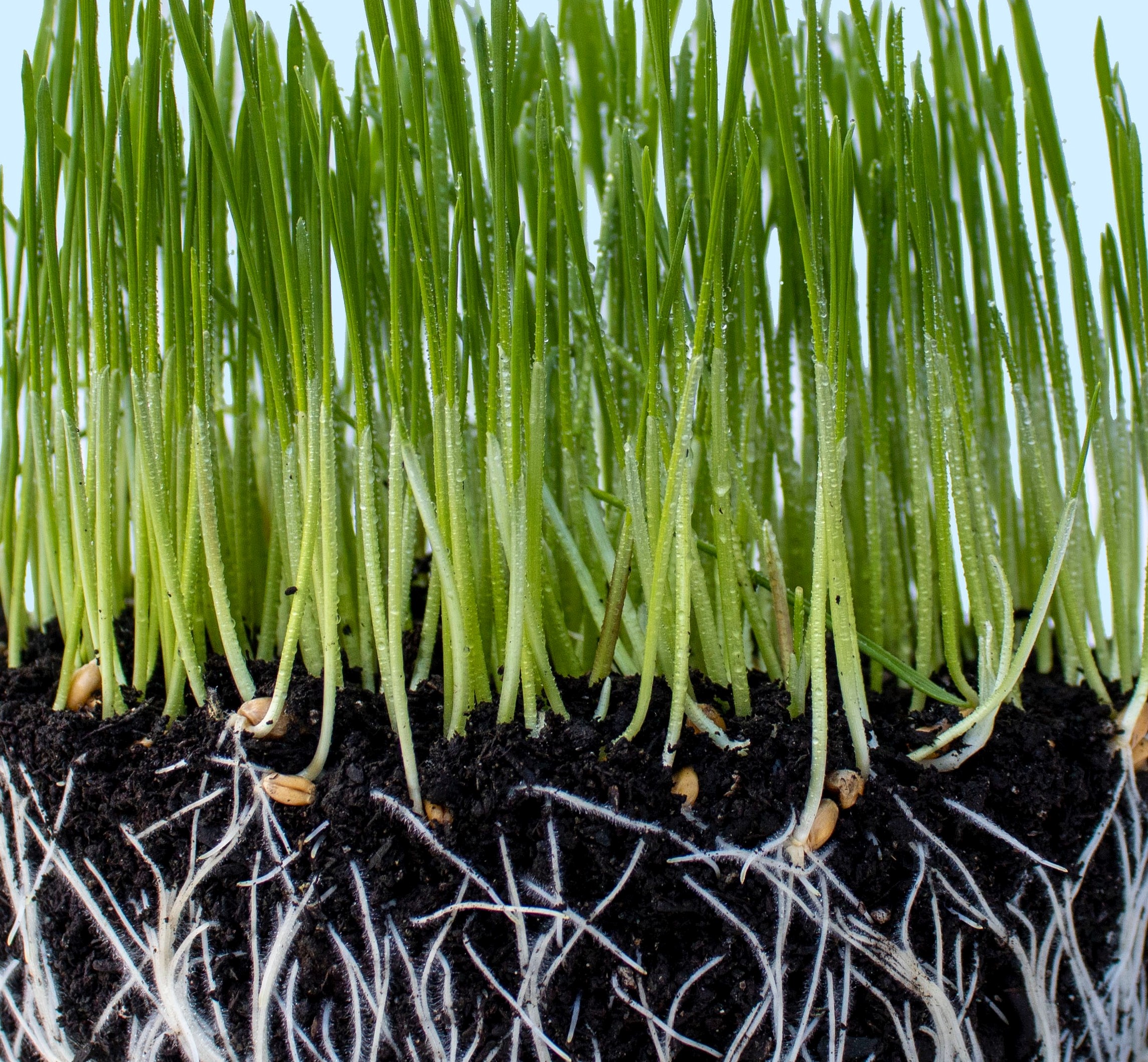
As we continue our Season of New Growth, today let’s take a look at our roots. In what ways are roots important to plant health? How does “being rooted and grounded in love” foster a stronger and healthier spirit? Here are some excerpts from The Importance of Healthy Plant Roots | Bonnie Plants, that also relate to our personal roots:
Did you know that what you see above ground in your plants is really determined by what’s hidden underground? What happens underground, where the plant roots live, drives plant growth. The bigger and healthier the root system, the bigger and healthier the plant. What do healthy roots do?
~ First, they provide the anchor needed to keep a plant in place…
As we deepen and extend our roots into the love of Christ, we become well-anchored to withstand any buffeting winds of change, drenching raindrops of sorrow, or pummeling hailstones of hurt that come our way. We learn to bend and recover, absorb and revive, strengthen and heal, while we are firmly secured in love – through all of the challenges of life.
~ More importantly, roots are the lifeline of a plant, taking up air, water, and nutrients from the soil and moving them up into the leaves, where they can interact with sunlight to produce sugars, flavors, and energy for the plant…
Did you ever place a celery stalk in colored water when you were a child? This simple science experiment demonstrated how a plant uses capillary action and osmosis to absorb and move water through itself. Over time, the color was visibly drawn up through the celery and into the leaves. Like the celery, as we deepen our roots and absorb more and more of the love of Christ, that love will become increasingly visible in us, too.
~ Additionally, biologists have recently discovered that roots actually secrete compounds that affect the microorganisms in the soil, doing things like helping protect the plant from disease and encouraging it to absorb nutrients from the soil…
With our roots grounded in love, we willingly contribute to the good of others. Doing so helps all of us to be healthier; as we protect and build one another up, we also strengthen ourselves. Our roots become our strong foundation as we intertwine and support one another.
So how do you get a system of good, healthy roots? Remember seven words: “Healthy, deep soil. Adequate moisture and nutrients.” If everything you do in your garden works toward that, your plants should thrive.
Our next verses from Ephesians reveal our source of “Healthy, deep soil. Adequate moisture and nutrients.”
I pray that you may have the power to comprehend, with all the saints, what is the breadth and length and height and depth, and to know the love of Christ that surpasses knowledge, so that you may be filled with all the fullness of God. (Ephesians 3:18-19 NRSV)
Our roots have plenty of room to extend into the “breadth and length and height and depth” of the nourishing soil of God’s love. And this love is right here, ready for us to deepen our roots, absorb love beyond knowledge, and grow into all the fullness of God.
Photo by Evergreens and Dandelions on Unsplash
FIVE MINUTE FRIDAY: DISAGREE

Today’s Five Minute Friday prompt immediately brought to mind a cartoon I saw recently. Two people are looking at a number on the floor; one says it is a six, the other claims it is a nine. Because of where they stand, they each see a different number. I find it interesting that neither are wrong, they simply see the number differently. They each have a different “viewpoint.”
My son once shared some words of wisdom about disagreements. When we encounter someone who has a different view or belief, a thoughtful way to begin any discussion is to begin by standing with that person. We begin by moving to where they are, seeing what they are seeing, learning how they have arrived at that place. We begin by looking at the issues together, instead of immediately starting out on opposite sides, facing off to argue about our separate viewpoints. We may still disagree, but we are no longer divided by a chasm of our differences, but standing together on the common ground we do share.
*Afternoon addendum:
After a few interesting and insightful comments from a Facebook friend, I would like to clarify a few statements. When I wrote, “neither are wrong” about the example of the number six or nine, I know that this is not always true. As he pointed out, issues of injustice such as racism, sexism, or homophobia are wrong. Violence and abuse are wrong. We are to love, care, honor, and help one another. This is always right.
My main point is to foster understanding by discussing our differences together, but in the case of God’s love for everyone, there may be a time to no longer “agree to disagree,” but to only disagree – by taking a firm stand against injustice.
(Five Minute Friday is an online writing community. Each week, we are given a one-word prompt and five minutes to write. You may find other posts or add your own at the link above!)


