Simply Soul Searching
HOW IS GOD LOVING ME – AND WHERE IS GOD LEADING ME?
Writing in the Sand
(As I continue to work on a blog series for Advent, I am sharing some thoughts I wrote years ago. This one is from April, 2011.)

John 8:2-9 (NRSV)
Early in the morning he came again to the temple. All the people came to him and he sat down and began to teach them. The scribes and the Pharisees brought a woman who had been caught in adultery; and making her stand before all of them, they said to him, “Teacher, this woman was caught in the very act of committing adultery. Now in the law Moses commanded us to stone such women. Now what do you say?” They said this to test him, so that they might have some charge to bring against him. Jesus bent down and wrote with his finger on the ground. When they kept on questioning him, he straightened up and said to them, “Let anyone among you who is without sin be the first to throw a stone at her.” And once again he bent down and wrote on the ground. When they heard it, they went away, one by one, beginning with the elders; and Jesus was left alone with the woman standing before him.
When Jim and I read this passage for our morning devotions, the image of Jesus writing in the sand reminded me of something my counselor taught me. He said that “for every action, there is a reaction… but between the action and reaction there is a space. That space gives us time to best determine what our reaction will be.”
I wonder if that’s what Jesus was doing. The Pharisees were trying to test him, hoping his answer would justify an accusation of wrongdoing against him. Before Jesus answered their question, he stopped to write in the sand. Could it be that he was thinking and praying about his response? Could it be that he was showing the crowd that this matter wasn’t urgent, that everyone should stop for a moment to thoughtfully consider? Could it be that he felt the magnitude of their intention, and so he took a moment to breathe and turn to God for wisdom and peace?
I love how even the small details written in the Bible can provide insights for us. In his writing in the sand, Jesus gives us an example to follow. How might we “write in the sand” more often these days?
When we are listening to someone’s words, we would do well to pause before replying. When we are observing someone’s actions, we would do well to pause before reacting. When someone is confronting us, we would do well to pause before countering them. We can then use that space to ask God to give us wisdom, to guard our tongues, and to guide our thoughts. We can ask God to show us what we might be missing or misjudging. We can use that space to center ourselves and offer more peaceful and insightful responses, instead of hasty or rash reactions.
When we write in the sand, we allow space for the inner voice of the Spirit to become our own.
Three Sunrises
(While I am writing blogs for Advent, I am sharing a few of my past writings. This one is from August, 2010.)
Day 1: On my morning walk, I was eagerly anticipating and watching for the early morning sunrise. However, my timing was off and the sun crested while I was walking in a neighborhood filled with homes. I kept glancing between houses, watching for the bright orange glow- but I was also moving quickly, trying to burn calories. Just then, I came upon a space between the houses and caught a glimpse of the sun coming up! But as I thought, “I should stop and savor this moment,” I remembered that my goal was to move quickly and burn calories. I kept going. That particular sunrise would never come my way again.
How many moments like these do we miss each day? More importantly, how many times has God touched our lives- in experiences, in people, in thoughts- and we miss this touch of God? God is here. God is now. We don’t have to wait until heaven- for heaven is here among us. We simply have to notice.
You will seek me and find me when you seek me with all your heart. (Jeremiah 29:13 NIV)
Day 2: Fully aware of what I had missed the previous day, I walked with my full attention toward the morning sky. This time, I stopped and thanked God for the beauty and the splendor of the sunrise. It was GLORIOUS! The clouds encircled the vivid orange globe, creating streaks of deep blue and violet throughout the surrounding sky.
God is a God of second chances. It is never too late. There are always “do-overs,” chances to begin again. The grace in all of this is that our second chances may be more beautiful than the ones we have missed- because we experience them with new awareness and appreciation.
See, I am doing a new thing! Now it springs up; do you not perceive it? (Isaiah 43:19 NIV)
Day 3: This morning the clouds covered the sunrise. Yet, even though I couldn’t see the sun, the clouds were strikingly tinged with the bright orange from its glow behind them. It was a beautiful morning, but in a different way.
An additional blessing from God’s love is the hope we are given, the hope we can carry with us in all circumstances. Even when clouds cover the sun, we know the sun is right there behind them, perhaps making a more glorious scene than before. Isn’t this the hope that we should be sharing with others?
Always be prepared to give an answer to everyone who asks you to give the reason for the hope that you have… (1 Peter 3:15 NIV)
Thoughts on a Rainy Morning
(I wrote this post back in November, 2013. The message newly resonates with me today, and so I share it with you.)

The weather app forecast stated, “rain showers will arrive at 8:45 a.m.,” so I was surprised to feel raindrops on my 7:00 a.m. walk!
But I found a blessing in the reminder that weather forecasts are wrong at times. Even with teams of trained meteorologists, advanced technology, and “interactive Doppler radar” working together to provide an accurate forecast, we are still often surprised by the actual weather.
There is a freedom found when we apply this to our lives. We try to live our lives well. We make plans and have dreams. We want to be a blessing to others. But at the end of the day, we often find that we haven’t lived as perfectly as we’d hoped. The early rain is a reminder and a blessing that we don’t have to be right or flawless. We CAN’T be right all the time, or live without making mistakes. Weather forecasts will still be wrong sometimes- even with the training, expertise, and sensitive technology- even with a team of people actually working to do this one task.
Like the weather, life presents us with so many variables, every moment of the day. A major setback or even a minor mood change, unexpected news or old experiences, joys or sorrows; any one of these can divert us from living rightly or perfectly. We do our best, but we aren’t the best.
That humble realization is as it should be. Let’s embrace the honest freedom of knowing that we aren’t perfect or flawless, and we will never be. But we are loved anyway. And let’s remember to extend that same grace to those we encounter on this ever-surprising journey of life.
Photo by reza shayestehpour on Unsplash
Some After-Halloween Observations
Twas the day after Halloween,
and out on the street
Karen found remnants
of the night’s Trick-or-Treat.
(This trash did not make it
into the garbage bins-
but before we get critical,
read ‘Those “Unknown” Sins’)
I found wrappers and boxes
run over by cars.
Then what should appear
but whole candy bars!
But first, I have news that
we all need to hear:
“Spidey” was Raptured
and yep… we’re still here.

So I offer some wisdom
since we’ll be here next year.
(I hope you enjoy
this Halloween cheer.)
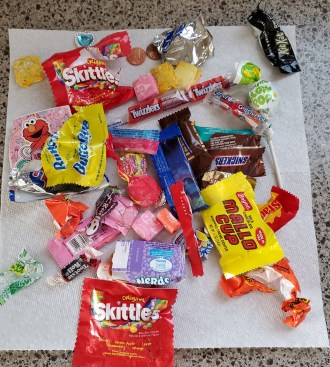
1. One person’s trash is another one’s treasure. Or blog inspiration.
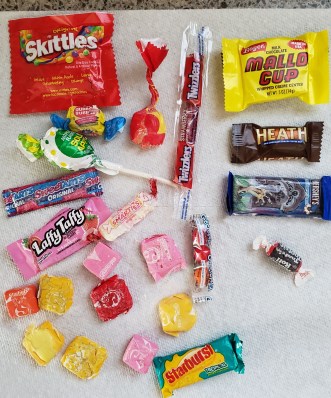
2. In a random sample of the whole pieces of candy left behind (unwanted), chewy fruit candy beat chocolate by a ratio of 19:4. Stick with chocolate.

3. All that glitters isn’t gold- or edible.

4. Some things are better left behind.
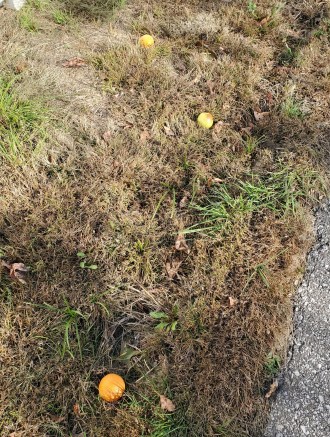
5. Fruit is a much healthier choice, if it is actually eaten.
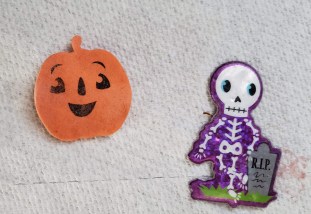
6. Remember how much a smile can brighten someone’s day. Unless you’re a skeleton.
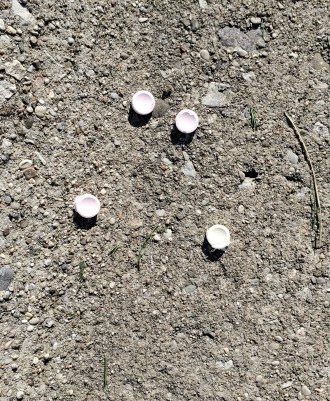
7. Smartees are everywhere. It may be best to ignore them sometimes.

8. Always look for the gems in every circumstance.
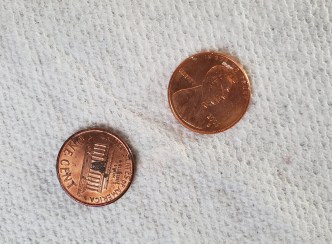
(I found two pennies- my symbolic reminders of God’s loving presence.)
9. God is in everything, if we only notice.
I hope this Nerdy blog writer made you Snicker today!

Radiant Splendor, Gentle Surrender (Autumn #5)
This poem was written in 2011, when a tree seemed to speak of the hope and purpose found in complete surrender.

BARRENNESS
It is autumn.
I stand tall and proud,
dressed with leaves ablaze
in a glorious array of golds and auburns.
It is autumn
and I delight in my purpose:
brightening the sky
and enchanting the earth
with my royal robes
of rich color and hue.
It is autumn
and I wave a colorful blessing
to those who walk below
while I gradually carpet
the path before them.
But suddenly the storms of life-
fierce, angry winds,
unexpected frosty snaps,
constant chilling breezes-
snatch most of my leaves
in fits of rage
before it is my time
to willingly surrender them.
I stand, barren and alone,
stripped and exposed,
while those around me-
still wearing their seasonal clothing-
are joining together
in a celebration of color.

It is autumn.
But suddenly my purpose
and my glory have been lost
as I become
the mere and only signpost
of the impending winter.
Yet, I feel the gaze of a walker below.
Why does she pause
and pensively consider
my outstretched limbs,
gray and empty against the sky?
Could it be that she sees
a different beauty?
Could my leafless form
be speaking to her soul?
What is it that has her pondering?
It is autumn.
Perhaps these empty branches
reveal a new story:
one that speaks of
seasons,
surrender
and strength.
A story that affirms
this searching soul.
It is autumn.
My dignity has been stripped…
or perhaps- yes-
it has actually been exposed.
Yes, it is autumn
but I am living an early winter.
The beautiful display is gone.
Strength and integrity
are all that remain.
With nothing left to shed,
the storms and winds
can no longer buffet me,
but simply pass freely through
my unencumbered limbs.
With my mantle of color gone,
could my empty branches
and my barren limbs
show strength in their reach?
When there is nothing left,
could my empty branches
and my barren limbs
allow You to shine through more freely?
Radiant Splendor, Gentle Surrender (Autumn #4)
THE FREEDOM FROM OUR WORRIES AND FEARS
Isaiah 43:1 (NRSV)
But now thus says the Lord, he who created you… he who formed you: Do not fear, for I have redeemed you; I have called you by name, you are mine.
Matthew 6:34 (NRSV)
So do not worry about tomorrow, for tomorrow will bring worries of its own. Today’s trouble is enough for today.
Philippians 4:6 (NRSV)
Do not worry about anything, but in everything by prayer and supplication with thanksgiving let your requests be made known to God.
Of all the burdens Jesus wants to take from us, it seems the burdens of fear or worry are foremost in his heart. All through the Bible we are told, “Do not fear,” and “Do not worry,” and Jesus repeats this quite often. Jesus and the biblical writers certainly know us well. I know how worry or fear can so easily creep into my thoughts- and how they love to linger there!
I drew a simple (“crude” 😀 ) flowchart to help illustrate the impact of worry on our lives and why worry is unhelpful. Think of our lives as a flowchart from birth to death. If we were to assign one day to each cell, we would see how all of our days leading up to today (the cell with the “T”) form a single chain of cells, each day singularly following the previous one. Whatever each cell contained- whether sadness, joy, delight, anger, love, frustration, life, health, or death- we have endured, embraced or enjoyed. We lived each cell one at a time, doing the best we could all the way to today.

But when we look beyond today and begin to worry about tomorrow, the individual chain quickly divides and expands into two chains, then three, four, and more. We may have a difficult day and start to worry if life will improve or worsen. Or we may have a great day but then worry that our good fortune won’t last. We tend to mentally chart every possibility in an attempt to control all we can. Our simple “one day at a time” expands into all of tomorrow’s possible outcomes, then all the ramifications of those outcomes, and then into further scenarios like this flowchart- extending and dividing. Tomorrow suddenly becomes way too much to handle!
And so Jesus says, “Today’s trouble is enough for today.”
At first this doesn’t sound too comforting, does it?! And yet, Jesus makes sense once again. Jesus knows today may be very challenging, difficult, confusing or sad. We may have plenty of trouble today- but these troubles are the certainties. Our fear and worry come from the unknown that lies ahead, not the reality before us. Today’s troubles are issues we can begin to do something about. Jesus doesn’t tell us not to grieve, or not to work to make a difference, or not to heal. He simply says not to worry about all the unknowns and uncertainties that lie ahead. Jesus knows we can deal with every present moment, because he himself is ever-present, offering us his strength, help and guidance.
No matter what concerns tomorrow may hold, we may hold the gifts of peace and hope. What is certain about today is Jesus’ presence and love. What is certain about tomorrow is Jesus’ presence and love. We especially have peace and hope when we trust that, no matter where our future cells take us, all the paths and extensions and winding routes will end at the very first cell of our eternal days. Whatever we experience in the cell before, the last cell in our earthly flowchart will be the cell of eternal joy.

May the radiant splendor of Jesus’ presence and eternal joy help us to gently surrender tomorrow’s worries.
Radiant Splendor, Gentle Surrender (Autumn #3)
THE FREEDOM FROM OUR WOUNDS, GRUDGES AND RESENTMENTS
Psalm 103:8-12 (NRSV)
The Lord is merciful and gracious,
slow to anger and abounding in steadfast love.
He will not always accuse,
nor will he keep his anger forever.
He does not deal with us according to our sins,
nor repay us according to our iniquities.
For as the heavens are high above the earth,
so great is his steadfast love toward those who fear him;
as far as the east is from the west,
so far he removes our transgressions from us.
Matthew 18:21-22 (NRSV)
Then Peter came and said to him, “Lord, if another member of the church sins against me, how often should I forgive? As many as seven times?” Jesus said to him, “Not seven times, but, I tell you, seventy-seven times.
Years ago I learned about the wonderful blessing of the recycle bin on my laptop. I had accidentally erased a document and believed I had lost it forever. I was thrilled when Jim showed me that I could find the document and restore it from the recycle bin! Since then, I am less anxious about deleting items- documents, emails, photos- because I know I can still find them if I need them.
Recently I have been comparing the practice of forgiveness to the recycle bin. Jesus came to free us from the burdens of grudges, resentments and wounds that we carry. Jesus frees us through the healing practice of forgiveness. Jesus frees us from our sins, and so we are to forgive others. In doing so, we find that we are further freed from these burdens of hurt that weigh us down! Forgiveness is a gift for the wounder and the wounded.
But how often is our act of forgiveness like the initial and superficial deleting of a file? We remove the transgression like a document from our regular files, but we feel the need to store it away in case we need it in the future. And when another transgression comes our way, we quickly go back to the recycle bin and restore all the old transgression files we once deleted!
When Jesus tells Peter that he should forgive someone seventy-seven times, my first thought is that I should forgive someone even if they hurt me seventy-seven times. Could Jesus be saying that it might take us seventy-seven times (or more) to fully forgive ONE transgression? Jesus knows our tendency to dredge up the past hurts again and again. Jesus knows about our personal recycle bins. Jesus understands, but he shows us a better way.
My laptop recycle bin is getting quite full. I know I need to empty the bin, and yet there is that anxiety about losing something forever. Right now, the full bin isn’t a problem; I still have plenty of storage space on my laptop. However, I would be motivated to empty the recycle bin if I happen to find a helpful or exciting new file that needs the extra data storage space.
Maybe that’s how we can foster the emptying of those recycle bins of our resentments, hurts and grudges. We first imagine how we might fill the emptied storage space with good files. We could decide to completely delete the wounds in order to make space for joy and healing. Or completely delete the grudges to make space for openness and creativity. Or completely delete the resentments to make space for intellect or beauty. We can choose to empty our recycle bins in order to refill them with something better.
God shows us through Jesus that we are FULLY forgiven. Our transgressions have been deleted AND the recycle bins have been emptied. The deleted files have been replaced with files of grace, love, mercy, kindness. Jesus wants us to love, forgive, and live that way, too. May our spaces be filled with radiant splendor… as we choose to forgive in quiet surrender.
Radiant Splendor, Gentle Surrender (Autumn #2)

These autumn reflections remind us of the needful cycles and seasons of life, and the freedom that Jesus gives us when we are willing to let go. Like the beautiful autumn leaves, our lives will reflect the radiant splendor and the gentle surrender that comes from trusting in the gracious love of Christ- especially when we release all of the burdens from which Jesus came to free us.
THE FREEDOM FROM OUR MISTAKES AND SINS OF THE PAST
For freedom Christ has set us free. Stand firm, therefore, and do not submit again to a yoke of slavery. Galatians 5:1 (NRSV)
When I am walking each morning, my right arm tends to swing freely while my left arm remains fairly stationary. At first this was puzzling to me- until I realized that I usually hang my purse on my left shoulder with my hand clutching the strap. This has become such a regular habit that even when I don’t have my purse with me, I still walk as if I do! If others were to notice my immobile left arm, they might assume that I am in pain or burdened or hampered in some way. While I am actually free and unencumbered, no one would know this by observing me.
I do not carry my purse, but I continue to walk as if I do.
Jesus came to take away our burdens, but how many of us continue to walk as though we are still carrying them? Jesus came to set us free from all that weighs us down, especially the burdens of our past- the burdens of our sin, guilt, mistakes and regrets. For freedom Christ has set us free. But do we truly live and move as freed people?
Years ago, a woman stopped by my office on her way to talk to the pastor. She and I both had been recently divorced, and we began talking about our heartache, guilt and sorrow that came with the ending of our marriages. We also talked about the relief of forgiveness and freedom we found as we began our new lives. But this poor woman was still deeply grieving the years she felt she had lost while living in an unhappy situation. Some of her regret could have been the natural soul-searching we do around midlife, but she seemed especially bitter, sorry and resentful that she had “wasted” so much time.
Did she know that she was also wasting that very day by wallowing in the regret and grief of what might have been? She was losing yet another precious day as she continued to lament her previous days. Even though she understood that she had been forgiven of her sin and freed from her broken marriage, she was unable to embrace that joyous forgiveness and freedom for her life. She remained burdened and consumed by the mistakes of her past.
Jesus wants to fully free us from our baggage. Jesus wants to unburden us so that we can walk differently through this life, to walk with joy and peace and love. One of the best ways we can demonstrate God’s love for the world is to live as forgiven people, with joyful, assured, peaceful spirits, with a lightness of being that comes from the freedom we have found in Christ.
This seems so simple. And yet when we are told, “Here, let me take that burden for you,” we can find it difficult to let go. We can become so accustomed to carrying our burdens that we feel uncomfortable without them. Bearing this additional weight has become our usual way of being, our usual way of walking through life.
At one point I tried to correct my arm movement, trying to swing my left arm to match the swing of my right arm. This felt strange and uncomfortable. We might need to unlearn some of our behaviors and attitudes as we begin to fully appreciate just how free we are. We may need to make a conscious effort on a regular basis. We may need to catch ourselves falling into our old habits and repenting of them. Most of all, we may need to daily entrust ourselves in him whom “we live and move and have our being” (Acts 17:28), to the One who freed us in the first place.
In Christ, we become new creations. We become people who are free to live and love, lightly and joyfully, as witnesses of God’s relieving and releasing forgiveness and love.
Make it so, dear Christ. Make it so.
Radiant Splendor, Gentle Surrender (Autumn #1)
 

Introduction- Tuesday, October 21
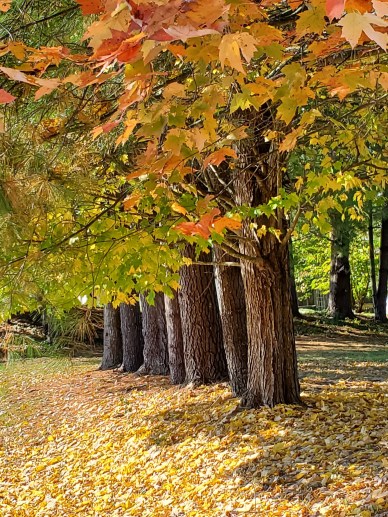
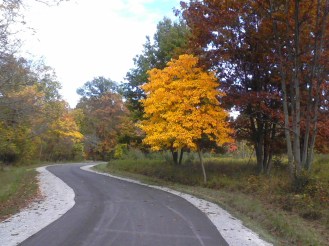
I love how God has created the seasons of nature, and how these seasons provide life lessons and inspiration for us. We too, experience the cycles of seasons in our lives- winters of barrenness and rest, springs of resurrection and new growth, and summers of productivity and abundance. Perhaps because I am at this later-middle stage of life, the season of autumn especially touches my soul. The autumn season is a sacred time of radiant splendor turning into quiet surrender, as the trees transform into their true and glorious colors and then gradually, gently surrender everything to the earth.
In my next few blogs, I will be sharing some of the insights God seems to be revealing through this movement of the trees from splendor to surrender. We will consider how Jesus graciously frees us to live lives of radiant beauty, and also discern what we should surrender in order to fully receive all that he has come to give us.
THE FREEDOM OF UNCONDITIONAL LOVE
1 John 3:1a (NRSV)
See what love the Father has given us, that we should be called children of God; and that is what we are.
At our WELCA Cluster Women’s Retreat this past weekend, Stephanie led us through some meaningful sessions on LOVE. We spent the first day discussing the limits of our human love: the times when we are unloving, the times when our love is conditional, the times we have been hurt by others’ conditional love. As each woman shared her personal stories, we gained new perspectives and appreciation for the amazing unconditional love God has for all of us through Jesus.
God loves us completely and fully. God loves us- no matter how we have been treated, no matter how we have failed in our love for others, no matter how we struggle and fumble or learn and grow in our relationship with God and one another. God loves us all the time. Always. Forever. The telling of our stories and the lessons of the day were powerful and meaningful.
But on Sunday morning, Stephanie asked a question that moved me to tears: “How would you love YOURSELF with a bold and Christ-like love?”
As I try to follow Jesus’ example of love, I generally think about growing in my love toward others. It often feels selfish to love myself as well. And in the times when I don’t like myself very much, to know that I am still beloved seems overwhelming and undeserved. This love IS undeserved! Turning this love of Christ toward myself feels so humbling… and so completely freeing.
We were invited to write down some ways we could love ourselves with the bold love of Christ. This practice began to open new visions, new images of whom we are called to be. Knowing that we are loved by God gave us the courage to dream, the yearning to grow and learn, the desire to see our unique selves as God has created us. Like the leaves of autumn, our true colors began to reveal themselves in the light of Christ’s unconditional love.
To genuinely live in the freedom of unconditional love, we must fully welcome, embrace and absorb this love. We must also fully surrender whatever may hinder us from from receiving and radiating this love. We may need to surrender our insecurities, our doubts, or our imperfections. We may need to surrender our pride, our selfishness, or our self-reliance.
What hinders you from fully receiving this generous and life-changing love of Christ? What might you surrender today? Like the autumn trees, we are beautifully transformed when we embrace God’s radiant splendor… through our gentle surrender.
A Tribute to Beth
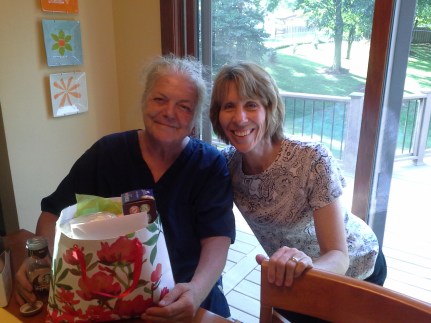
(Beth on her birthday, September 2014)
A few weeks ago, Jim and I learned of the earthly passing of a dear friend. In some ways, Beth was our most unique friend. In some ways, she was our most trying friend. But in many ways, she was also our dearest friend. Our lives have been enriched, expanded and illuminated because of our friendship with this wild and wonderful woman.
I first met Beth while serving as a youth director in Toledo. Beth was homeless, and at that time she traveled by bicycle all over the Toledo area. She would stop by my office just to chat, or to warm herself during cold winter mornings, or to escape the heat of sweltering summer afternoons. Many times she also asked for financial help, but she always promised to pay me back- and she did whenever she could.
Oh, how I wish I could say that I was always gracious and welcoming, but there were times when I didn’t want to be bothered. I’m ashamed that I even stayed elsewhere in the building a few times when she stopped by. But most of the time, I was blessed to spend time with her, help her when I could, and come away from our visits with a lighter spirit. I knew that this was what I was called to do through the love of Christ. And certainly my church office was the perfect setting to serve like Jesus.
Then came the eye-opening, soul-opening day when Beth asked me where I lived. At first, I wouldn’t tell her; I was worried that she would come by at inconvenient times, and I was anxious about actually having her in my home. The hurt in her eyes was profoundly, sadly visible when I remained quiet. She knew then that I really didn’t consider her the friend that I had led her to believe she was.
Through that humbling and heart-breaking moment, God opened my heart. I was reminded about selfless service. About genuine hospitality. About spiritual integrity.
I gave her my address. That small step opened a new venue and new life for our friendship over the next years. I will be sharing some of our favorite times and stories of Beth as they come to me in the days ahead.
Here is one of my favorites…
Jim and I were meeting with other ministry colleagues when Beth came to the church. She was very concerned; she had found a wallet and was desperate to return it to the one who lost it. Beth knew there was money in the wallet, but as Jim searched for identification, he found an additional two hundred dollars tucked behind another flap! When Jim told her what he had found, Beth only became more determined to find the rightful owner. She never even considered how nice it would be to keep the money for herself.
This was our first lesson from Beth. What an honor, a privilege, to know someone who is so destitute and yet would never, ever consider keeping the money. Oh, the rich generosity of this friend who had nothing, who still chose to return the treasure she had found! What a blessing to see Christ in the one we had only hoped would see Christ in us.
Thank you, Beth, for showing us how to live with true compassion and selflessness.
Thank you, God, for bringing Beth into our lives.

