Simply Soul Searching
HOW IS GOD LOVING ME – AND WHERE IS GOD LEADING ME?
Look Beyond or Look At?

Monday Moment- Observing the Obstruction
I have a favorite point along my walking path that offers an expansive view of sky, field, trees, hills and sunrises. This view is beyond the paved street, down a gravel path and up a small rise onto a wide field. Last year I began a practice of extending my path each day to appreciate the view, greet the day, and take a photo. I then decided to do this every day for an entire year. I planned to photograph the beautiful scene every morning, hoping to capture the gradual changes and seasonal beauty that time would reveal.

Last January we had quite a windstorm. The following morning, I was dismayed to find a huge tree section had been dragged to my treasured place on the field! Deposited right at the top of the rise, the tree blocked the grand views I had grown to love. I was upset. My view and my plans for the photo progression series were ruined. I quit walking to my once-treasured spot. I just stopped at the end of the street and turned for home.
A few weeks ago I decided to walk back and check out my view again. The first thing I noticed was that the tree had been decomposing, making its slow return to the earth. Branches had broken off and leaves were gone; the tree wasn’t quite the obstruction it once had been. Birds frolicked and pecked for food along the trunk and branches as they chirped loudly to one another. Grasses and wildflowers, usually cut down with regular mowing, now flourished in the shelter of the tree limbs. I found that the dead tree had a beauty of its own that spoke to my soul.

This “obstruction” to my view then became the center of my attention. In changing my focus, I gleaned several insights.
- Is an obstruction really an obstruction, a barrier to look around or look beyond? Or is an obstruction actually a revelation waiting to be noticed?
- When I seek only the glorious beauty of distant grand vistas, I miss the gentle beauty of everyday moments before me.
- When I focus solely on future hopes and dreams, I overlook miracles that are unfolding here and now.
- I regret that I did not continue to take photos all along. The treasures of life unfold so gradually that I may not notice the gifts in process until much later. What have I missed along the way?
- The death of the tree brought gifts to the world; nutrients to feed the soil and spaces for new life to begin. God reveals significant insights for life and death through all of creation.
- An insurmountable obstacle may eventually diminish or even become a blessing, but only if I learn to face and embrace the obstacle, try to uncover all it holds for me, and allow the time and space for God to work.
I turned for home that morning, wondering how many other sacred moments I have only perceived as obstacles to my plans, or obstructions to my view. I am thankful that God can use everything– grand vistas and minute details, unimpeded progress and hindering barriers, yielding hearts and stubborn ways- to teach and inspire. May the lessons keep coming, and may I become a more attentive student.

I am about to do a new thing;
now it springs forth, do you not perceive it?
Isaiah 43:19 (NRSV)
Listening to Your Gut (and God)
John 14:16-17 (NRSV)
And I will ask the Father, and he will give you another Advocate, to be with you forever. This is the Spirit of truth, whom the world cannot receive, because it neither sees him nor knows him. You know him, because he abides with you, and he will be in you.
During my hysterectomy for ovarian cancer, a chemotherapy port was attached to my lower rib. For nine weeks, my treatments were infused directly into my abdomen through this port (instead of through my veins), so that the chemotherapy drugs would coat my organs directly. A few months later, I started having terrible muscle spasms near the port. At first, I was able to stop them by breathing slowly and lying still. But each evening they worsened, until one night they would not subside and Jim took me to the emergency room.
When I described my pain as a muscle spasm, the doctor on duty immediately discounted my explanation and replied that she didn’t think this was the problem. Well, it certainly felt like my muscle was tensing, but since she was the professional I began to doubt myself. Several blood tests, an MRI, an X-ray, and lots of numbing pain relievers later, no problems were revealed. After several long hours, I finally had another spasm while an attendant was standing by my bed. He could then see what was happening to me and where the problem was located. Diagnosis: muscle spasm.
My experience serves as an actual physical example of the importance of “listening to my gut.” Had the doctor and I trusted what I was feeling in my gut, we could have saved lots of time and medical expenses.
This expression, “listen to your gut” refers to our intuition. We are wise to pay attention to that “gut feeling” within us that tells us whether something is or isn’t right for us, whether something does or doesn’t fit with our personal integrity, or whether something brings either an inner peace or an inner turmoil to our souls. There are times when our gut compels us to do something even when it doesn’t make sense and yet it feels so right. There are other times when an opportunity seems perfect, but our gut tells us to decline.
I believe that the Spirit speaks to us through our gut feelings. In John 14, Jesus tells his disciples that they will know this Spirit of truth abiding within them. Our gut feelings serve as a way for the Spirit to guide us into our own self-truths. How many of us have been surprised by a gut feeling that we should do something, and then in doing so have discovered a new truth about ourselves or found a blessing in heeding that inner voice?
Jesus goes on to say that the world won’t recognize this Spirit within us. So there may be times when people question our deep intuition or gut feelings (the Spirit’s movement), because from the outside they make no sense. As in my example, the emergency room doctor based decisions on the outer evidence- my recent incisions, my cancer treatment records, and my description of the pain. The doctor wanted to do everything possible to help me but could not fully know what I felt within. Perhaps the doctor assumed the worst, given my situation, and for that reason I am grateful for the thoroughness- even though it proved unnecessary.
People around us may discount our longings or believe we are mistaken. We can be grateful for their input, because we know they want to help us- based on what they are able to see. We have more to go on. We have a greater insight into our souls and a deeper awareness of the Spirit within us. Our gut feelings may not make sense to those around us, but they will make complete sense within us, because we are hearing from the Spirit of truth. The Spirit who reveals our truth.
(As I was contemplating this blog, I dictated my thoughts onto a memo app on my cell phone. I found it a sacred coincidence that when I said the word, “gut” the app entered the word, “God.”)
Photo by Daniel Fontenele on Unsplash
“Keeping” Sabbath

Monday Moment
Last fall I led a mini-retreat on spiritual practices. As I enthusiastically described my morning routine of waking at 5:30, writing in my daily journal, sharing coffee and devotional time with Jim, and walking for an hour with God, one of the participants quietly asked me, “What time do you have to be at work? I have to be at my desk, ready to go by 7:30.” Oh… My part-time hours generally began at 10:00- and even those were flexible. I was offering my suggestions for spiritual practices from a different place and more open season of life.
In recent weeks I have been contemplating the practice of Sabbath-keeping. It began when my son Kevin, overwhelmed with writing papers, doing research, interviewing volunteers, working long days, and winding up his internship for his PhD, was also told to “take time for self-care.” My daughters, both mothers of little ones, have been comparing what few hours of sleep they have been able to have. They work full time, spend their evening hours tending their homes and families, and finally fall asleep for a few hours before beginning again. Scheduling time for self-care or Sabbath rest becomes an additional burden in these busy seasons of their lives. When they look over their schedules, nearly every hour is filled with necessary and worthwhile tasks.
If we were to look up “reasons for Sabbath” on the internet, we would find quite a number! We would learn that Sabbath is commanded of us, the third of the Ten Commandments. Sabbath is to be a day of rest. Sabbath is a time to honor and worship God. Sabbath is a recognition that God is in control. Sabbath is a time to be grateful. Sabbath is a time to slow and be present to those around us. Sabbath is a time to replenish our souls.
But Sabbath doing doesn’t necessarily foster Sabbath keeping. I have attended worship services in which I struggled to keep awake, or was distracted with worry, or even wrote grocery lists instead of worshiping God. Sometimes my morning walks with God have been fruitful and deep; other times God feels quite far away. Then there have been times when my fully scheduled day inspired gratitude, fostered a peaceful and restful spirit, and opened my sense of the presence of God more than my prayers in a quiet sanctuary.
Today I want to offer encouragement for my loved ones and any others whose lives are very full. (All of the examples that follow have happened to family members in recent weeks.) When you are working long hours to provide for your family, when you are scrambling to finish three research papers before the end of the term, when your only transportation home is a bus that comes after regular work hours, when you work on your day off so that you can enjoy the weekend with your family but your children bring home hours of homework, when your Sunday morning involves leading worship instead of resting in worship, when you rise early to get ahead on your correspondence and find your email server is down, when you collapse to sleep for a few hours and your baby awakens five times, when the foster agency asks if you can take a youngster for an emergency overnight stay, when your already full day is peppered with unexpected interruptions…
Remember that what you are doing is needful, purposeful, and good. What you are doing is important for this time, for this season of your life. What you are doing is of great value. What you are doing is essential for you and those you love. What you are doing through your careers is greatly helping other people. Recognize that if what you are doing isn’t any of these, you would have already abandoned them.
Take heart. We can KEEP Sabbath in our souls when we can’t DO Sabbath. We can carry the perspectives and the purposes of Sabbath within us as we tackle our busy days. We can attend our careers, commitments, families, friends, and daily living with a spirit of appreciation and gratitude to God. We can know that what we do has value, gives us our purpose, and helps others. We can tackle our busy days with a non-anxious, restful countenance. Most of all, we can do all these things in servant love for one another. And when we feel overwhelmed, we can rely on God for our strength and peace.
One day soon, may we each find the space and time to fully embrace self-care and Sabbath practices. Until then, may we not regard Sabbath-keeping as one more task to do, but instead carry that inner Sabbath presence as our faithful way to be.
May the God of hope fill you with all joy and peace in believing, so that you may abound in hope by the power of the Holy Spirit. (Romans 15:13 NRSV)
Photo by Dingzeyu Li on Unsplash
Between Meals
Food for Thought, Day Six
Saturday, August 31st
Luke 22:19 NRSV
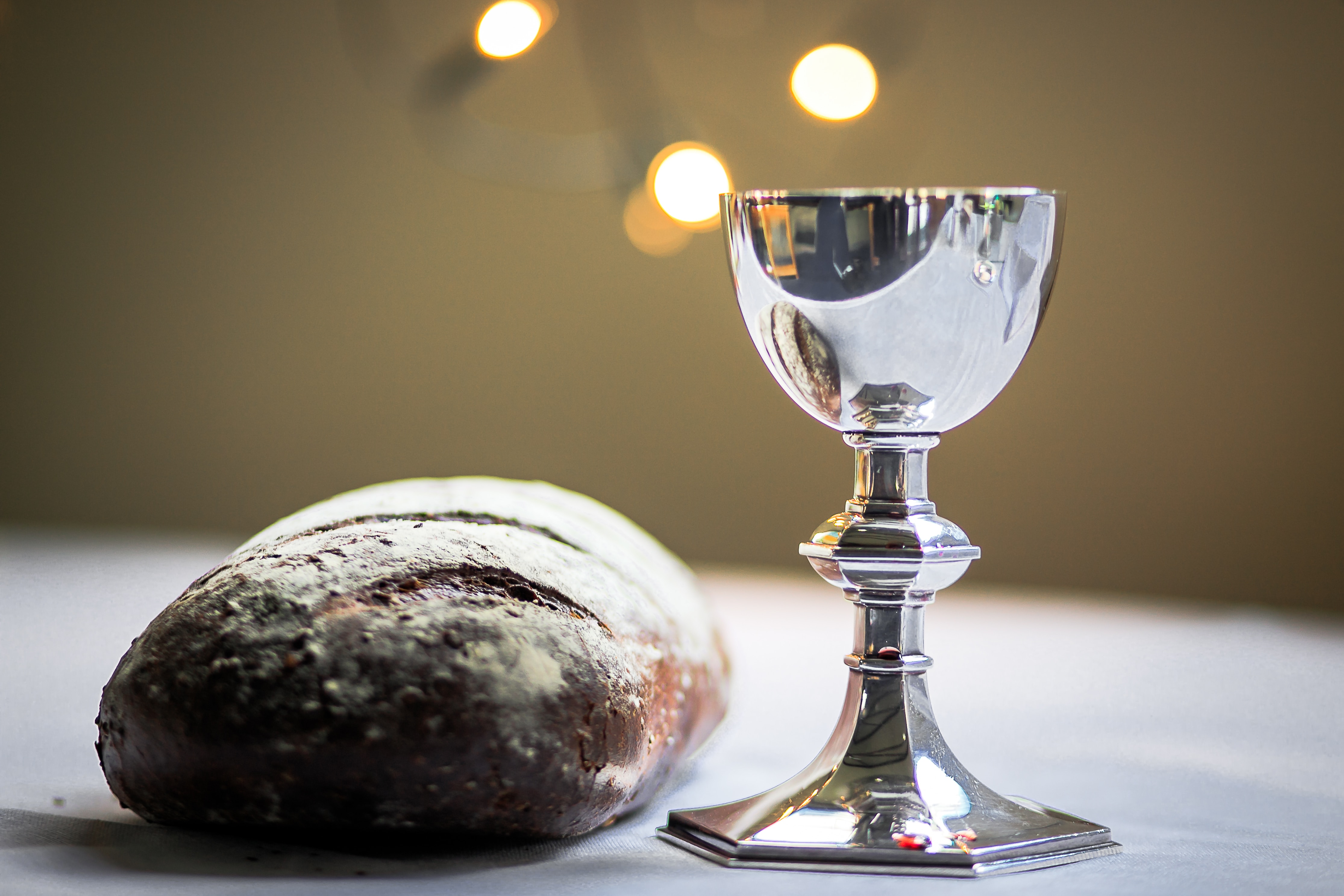
Then he took a loaf of bread, and when he had given thanks, he broke it and gave it to them, saying, “This is my body, which is given for you. Do this in remembrance of me.
As Jesus shared his last Passover meal with his disciples, he instructed them to keep sharing the bread and wine together, and to remember him when doing so. Since then, people all over the world continue to gather for this meal, sharing the bread and wine and remembering Jesus. This sacramental meal has become very meaningful for much of humanity. When people speak of their personal experiences and their understandings of Communion, one can see the rich significance this sacrament holds in a variety of ways.
What if Jesus also gave us this sacrament to serve as a starting point? When Jesus tells us to break bread and drink wine, he is inviting us to gather together. And when we want to get to know people, what do we usually do? We invite them to a meal! Communion serves as a connecting point to begin building relationships with one another and to grow as a community of Christ. Communion and community are closely connected words.
In his book, A Bigger Table, John Pavlovitz describes Jesus as a table setter:
“What struck me when I began to read the Gospel stories was Jesus’ table ministry, the way he so often used the act of sharing a meal, the act of breaking bread, as a way of letting people know they were seen and heard and known and respected… The table was an altar around which he welcomed the world to experience communion with God and with one another.”¹
If Communion is a starting point, then what we do between meals becomes very important. Imagine Jesus at his last Passover meal with the disciples. They were friends, they were connected, they had worked and served, they had struggled and prayed, they had fed and healed. That last meal together was so much more than a get-acquainted dinner. If we connect at the Communion table but then go our own ways until the next meal, are we getting to know one another better? Are we serving others together? Are we studying, praying, listening, or helping one another? If not, we will gather as strangers again for the next meal.
We have thought about food quite a bit this week. What we do between meals makes an important difference, too!
And let us consider how to provoke one another to love and good deeds, not neglecting to meet together, as is the habit of some, but encouraging one another, and all the more as you see the Day approaching. (Hebrews 10:24-25)
Thanks for reading.
¹Pavlovitz, John. (2017). A Bigger Table. Louisville: Westminster John Knox Press
Photo by James Coleman on Unsplash
“What’s Eating YOU?”

Food for Thought, Day Five
Friday, August 30th
Isaiah 26:3-4 (NRSV)
Those of steadfast mind you keep in peace—
in peace because they trust in you.
Trust in the Lord forever,
for in the Lord God
you have an everlasting rock.
When I was in elementary school, my stomach hurt every day during the recess period that followed lunch. At first my young mind reasoned that stomachaches were just part of life, until I realized they only happened during recess. So, for a while I thought recess was to blame, until I recognized that eating lunch caused the problem. Then one day my mom happened to put an apple in my lunch instead of a banana. I went to recess- and was surprised and thrilled to feel fine! My nausea wasn’t from life, recess or lunch, but only from the banana. A small difference in my lunchbox made a big difference for me. The rest of the year went much better!
We have thought quite a bit about the choices we make and the foods we eat this week. Today we are flipping our perspective a bit, to think about those things that eat at us, the things that nag us, bother us, and consume our thoughts. I know I’m not alone when I awaken during the night and feel as if something is troubling me. Or when I’m going through my day and realize that I have been distracted, not fully present to the moment. Or when I find I am clenching my teeth. Or my stomach feels a vague uneasiness and my soul feels unsettled.
“What’s bothering me?” I ask myself when I notice I’m uptight. “Oh yes… it’s this trouble that’s gnawing at me.”
The older I become, the more I understand that this awareness is just the beginning of any steps toward healing or problem solving. Usually the first trouble I name isn’t the actual reason, but only a step toward discovering the true problem. When my stomach hurt at recess years ago, I initially understood the pain as just a normal part of life, then reasoned that it came from recess and lunch, and finally learned that it was only the banana that caused the trouble.
We can’t begin to solve a problem until we have truly discerned the real problem. The problem needs to be clarified and specified before we can address it accurately- and at times, we find that we have been blaming the wrong thing. The more we can pare our troubles down to a specific one, the better we are able to help ourselves. I have found so often that once I name the specific and accurate reason why I am troubled, the trouble naturally seems smaller!
In all of our troubles, God is our one true source of peace. God already knows what is truly and specifically bothering us. What’s eating you? God is ready to help reveal the trouble… resolve the problem… remove the hurt… remedy the wounds… and restore our peace.
See you tomorrow.
Photo by Denys Argyriou on Unsplash
“Don’t Bite Off More Than You Can Chew”
Food for Thought, Day Four
Thursday, August 29th
Mark 6:30-32 (NRSV)
The apostles gathered around Jesus, and told him all that they had done and taught. He said to them, “Come away to a deserted place all by yourselves and rest a while.” For many were coming and going, and they had no leisure even to eat. And they went away in the boat to a deserted place by themselves.
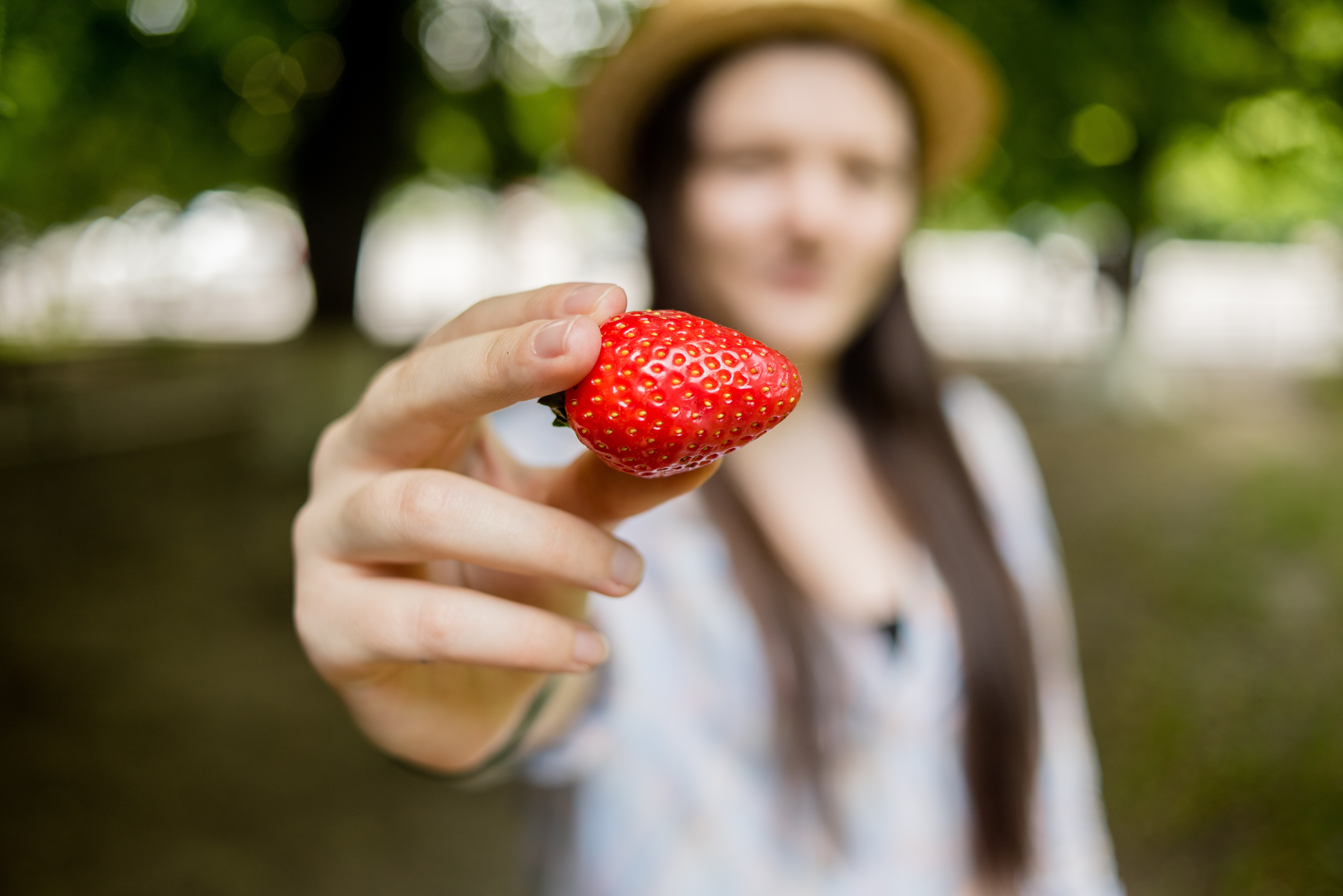
I was at a church potluck event enjoying dinner and friendship. Picking up a fresh strawberry, I opted not to bother cutting it and instead popped the whole thing into my mouth. The berry was firmer than I expected, so I was soon reminded that the space between my upper and lower teeth is much smaller than the space in the middle of my mouth! I could NOT get that strawberry between my teeth. I had literally taken “more than I could chew.” I endured a few embarrassing and uncomfortable moments before the strawberry softened enough to eat.
“Don’t bite off more than you can chew” is a phrase that cautions us to keep from taking on more than we can handle. I think the problem for most of us is that we can’t accurately predict our breaking points. We don’t know at what point “enough” will exceed enough and become too much. In addition, many of us have such high expectations for ourselves, believing we can take on more responsibilities when we are already busy. And how many of us have even convinced ourselves with the faithful assurance that “I can do all things through him who strengthens me” (Philippians 4:13)? We are people of determination, perseverance, willingness, and a desire to be helpful. There may even be a sense of pride in our busyness and full schedules. “What’s one more thing?” we ask ourselves. “I can do this!”
“The strawberry doesn’t look THAT big.”
Until that breaking-point moment comes. We are running at full speed, efficiently managing every waking moment, holding everything in order with our capable hands- and then comes that one unexpected interruption. Our tightly-scheduled system falls apart… and so do we. “I don’t have time for this!”
As far as I can tell through reading the Gospels, Jesus doesn’t seem to be impressed with busyness. Jesus came to give us an abundant life, not a busy life. Abundant living isn’t about having filled schedules but well-lived days. Days in which we are productive but not stressed or overburdened. Days in which we have time to be present to the holy moments, the movements of the Spirit, the blessings we have been given, the people around us, and the resting places offered for our souls.
In our Bible passage, Jesus invited the disciples to rest. They were excited about all that they had done and taught. You can almost sense their pride and enthusiasm as they told Jesus about their accomplishments. Jesus recognized his need and their need for rest, especially after hearing the sad news about John the Baptist’s death. He told his friends to come away and rest for a while. But if we read on, we learn that once again they were interrupted as people came seeking help and hope. Perhaps allowing even this short time away helped to restore and replenish them.
Rather than discovering our limits in times of stress and overload, we benefit by being mindful of our choices in the first place. Let’s revisit the potluck and my strawberry for some ideas to help us be mindful of our schedules.
We only have one plate to fill. We only have one life to live- how do we fill this one life with the best choices? What are the things we hope to experience by the end of the line?
There is a long table full of options still ahead. If we take everything that is initially presented to us, we may have no remaining space for a wonderful choice that is offered further down the line. When we say “yes” to something good, we may be saying “no” to something better.
Our initial “gut” reactions can guide our choices. Even at first glance, some items look very appealing to us and some definitely do not. When we are offered something to consider, trust that initial gut feeling to serve as a guide. (I have found myself telling someone that I will consider the opportunity, when my gut immediately said, “No way!” Why waste time for both of us?)
We are not obligated to try something just to please the person who made it or recommended it. Our plates can only hold so much. We cannot please everyone who offers us an opportunity or choice. We need to honor our limited plate space.
We can always circle back to reconsider possibilities. Some of the options before us are intriguing, but we aren’t quite certain we will enjoy them. We can fill our plates first with the definite choices and then revisit other options if we have the space. “First things first.”
Our secondary choices might be someone else’s first choice- leave it for that person. There will be options that we would be happy to add to our plate, but perhaps someone else would enjoy them even more.
Some of our choices will be better in a different season. Is this the best season for strawberries (or commitments), or should we wait until the timing is better? On the other hand, are there things on our plate that are now out of season? Can we discard those to make room for fresh choices? What are the choices that are fresh and appealing for our current season of life?
We should consider whether a choice is worth the effort. Will we still enjoy this choice if it involves more work than we anticipate? (I have passed up different foods simply because I didn’t want to bother getting a spoon or juggling an extra plate.)
We may be able to cut our portion size to ensure room for other things. Can we divide the berry (or the responsibility) into bite-sized portions? Do we need to eat the whole strawberry all at once, or can we eat it slowly over a longer period? Is there someone who will enjoy sharing the work- and the fruit?
If we are patient, we may find the best has been saved for the last. I was going through the potluck line with a vegetarian friend who was also passing by the hot dogs and hamburgers. As we kept moving down the line with empty plates, he told me that he has learned to be patient, because there is always plenty of the best and most delicious foods toward the end of the line. He was right.
If we are discerning with each option and opportunity that comes to us, we will fill our plates and our lives wisely and well. Isn’t it delightful to have plates and lives that are full but not overflowing, that are filled with our best choices, and that have a little extra space for that unexpected treat coming our way? Isn’t it joyful to have plenty of time to chat, to relax, to be present, and to savor every bite and every day abundantly?
See you tomorrow!
Photo by Євгенія Височина on Unsplash
Pass the Bread
Food for Thought, Day Three
Wednesday, August 28th
John 6:32-35 (NRSV)
Then Jesus said to them, “Very truly, I tell you, it was not Moses who gave you the bread from heaven, but it is my Father who gives you the true bread from heaven. For the bread of God is that which comes down from heaven and gives life to the world.” They said to him, “Sir, give us this bread always.”
Jesus said to them, “I am the bread of life. Whoever comes to me will never be hungry, and whoever believes in me will never be thirsty.”
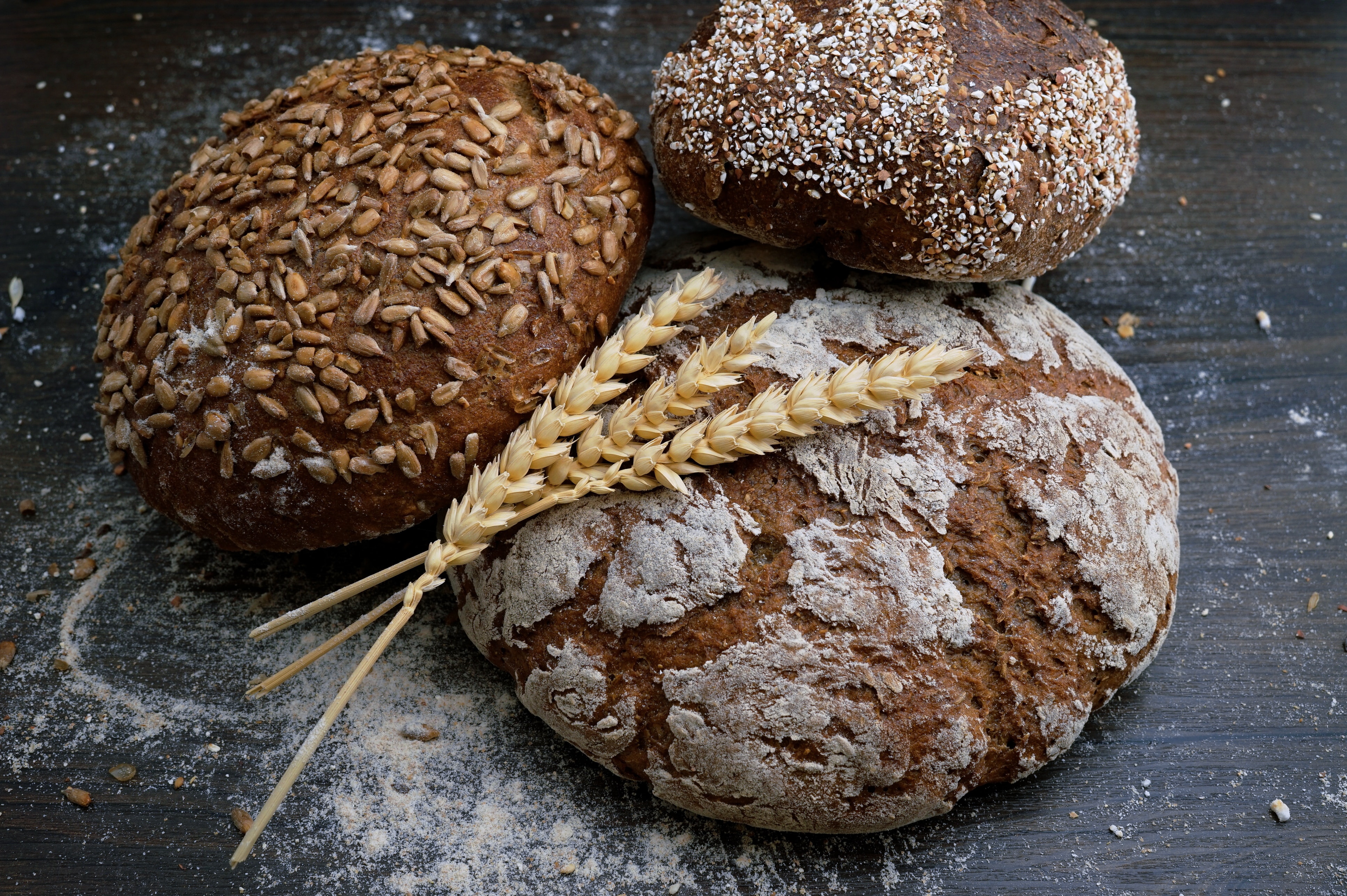
When we eat wholegrain breads we receive so many beneficial nutrients and fiber. Leah Dowling writes that eating multigrain bread provides good dietary fiber, and also lowers our risks of weight gain, heart disease, Type-2 diabetes, and some cancers. Dietary fiber prevents constipation and feeds the “good” gut bacteria. Wholegrain bread contains the entire grain, and so it supplies the B and E vitamins, along with minerals such as iron, zinc, magnesium, and phosphorus. It’s a source of carbohydrates, protein, unsaturated (good) fats, as well as three types of fiber: soluble, insoluble, and resistant starch.¹
On the other hand, eating white bread offers NO nutritional value, and may even lead to the health troubles that wholegrain breads work to prevent. But oh, that white bread! I mentioned earlier this week that I have trouble turning down the warm and buttery white rolls that often arrive at our table when dining out. I love their soft, smooth texture, their “easy to swallow” consistency, their buttery sweetness, and the swiftly satisfying fullness they bring. Wholegrain breads provide much more nutrition, but their fiber, grains and seeds make their texture less smooth, soft and consistent. They are somewhat denser and chewier and may take longer to eat.
Jesus tells us that he is our bread of life. He promises that in him we have everything we need. He is our source of spiritual nourishment, he sustains and strengthens us, and he offers us fullness of joy and abundant life. But do we look to Jesus, our bread of life, as more like white bread than wholegrain? I wonder if I do…
~I welcome the words of Jesus that are easily swallowed. I happily partake of his words, “Peace! Be still!” to the storms around me (Mark 4:39), or “Take heart, it is I. Do not be afraid” (Mark 6:30), or “As the Father has loved me, so I have loved you; abide in my love” (John 15:9), or especially his words on the cross, “Father, forgive them; for they do not know what they are doing” (Luke 23:34). But I could politely decline such words as, “If anyone forces you to go one mile, go also the second mile” (Matthew 5:41), or “You will be hated by all because of my name” (Matthew 10:22), or “I have come not to bring peace but a sword” (Mathew 10:34). These are much more difficult to swallow!
~I can be tempted to believe I obtain enough nourishment with a swift, comforting and self-satisfying “white bread” prayer, without bothering to linger and chew on the deeper mysteries and complexities of Jesus’ life and words. I find it easier to savor and swallow the pure and smooth consistency of his self-giving love and obedience to God, more than the irregular and unexpected roughage of his sometimes confusing or contradictory words and actions toward people.* I understand that each gospel writer had different intentions and the cultural ways of that time were different from ours, but it’s easy to put off researching a Bible passage, examining its context, content and culture, and seeking the bigger picture or deeper meaning.
We may wish to have ‘white bread’ Jesus (“He said it, I believe it, that settles it!”) instead of the nutritious, surprising, fulfilling, challenging, ‘wholegrain’ Jesus. (Come to think of it, how many paintings have you seen that portray Jesus as a white person?!) But Jesus comes to us as our ‘wholegrain’ bread of life. If we are to ingest and absorb all of the beneficial and good things he offers for our spiritual health, we must slow ourselves in the partaking. We need to meditate, reflect, chew on, and discover everything that comprises Jesus, the bread of life.
Like the whole grain, we need Jesus in his entirety. The easy and the difficult. The love and the correction. The longing and the fulfillment. The tenderness and the roughage. The sweetness and the fiber. The clarity and the mystery. The yeast and the seeds and the grains. We need every part of Jesus to live in spiritual health and sustenance. We need all of Jesus, our wholesome and complete bread of life.
Pass the bread!
See you tomorrow.
¹://www.inverse.com/article/54095-which-bread-is-healthiest-for-you-multigrain-whole-wheat-whole-grain. (Leah Dowling, The Conversation, 3/17/2018)
All Bible verses are from the NRSV version.
Photo by Wesual Click on Unsplash
*Examples: Why did Jesus immediately heal two people (Matthew 9:18-26) but wait two days to bring his friend Lazarus back to life (John 11:1-6)? Why did he say, “You shall love your neighbor as yourself” (Mark 12:31), but initially ignore the desperate Canaanite woman, even saying, “I was sent only to the lost sheep of the house of Israel” (Matthew 15:21-28)?
“You Are What You Eat”

Food for Thought, Day Two
Tuesday, August 27th
Years ago, one of my coworkers was attempting to lose weight. She ate so many carrots that her skin began to turn orange! “You are what you eat” became visibly true for her, as her changing skin color became obvious. All of those carrots became absorbed into her body and she began to look more and more like… a carrot.
“You are what you eat” implies that what we eat does influence who we are. We began this week (“An Apple a Day Keeps the Doctor Away”) with thoughts about caring for our bodies with nutritious foods. The changes we make might not be as obvious as turning orange, but our healthy choices will lead us to become healthier people.
Food isn’t the only thing we ingest on a daily basis. We are presented with many other things that compete for attention throughout our waking hours, and what we absorb can influence our spirits and our bodies. Today we will consider some of the other things we choose to ingest that also have an impact on our well-being.
Breathing. Do we breathe in enough fresh air to overcome the stale recycled air of an office or retail shop? Do we breathe in enough delightful aromas of delicious foods or soft scents of essential oils to combat exhaust fumes or factory smells?
Seeing. Do we notice enough of the genuine beauty of nature beyond the landscape screensavers on our laptops? Do we read enough interesting and worthwhile books to balance our television sitcoms? Do we spend more time looking at Amazon.com than our loved ones’ faces?
Hearing. Do we listen to enough news to keep us informed and concerned, while keeping space for peaceful listening to music, podcasts, or audio books? Do we set aside time from all noise for silence before God?
Tasting. Do we take the time to taste and savor our food instead of gulping it down to get on with our day? Do we eat our meals with gratitude and joy?
Touching. Do our fingers touch a keyboard or a remote control too often? Do we spend enough time holding hands, cuddling babies, writing notes, or creating art?
Thinking. Do we fill our minds with thoughts that are of value? Do we counter our self-centered thoughts by thinking of others? Do we lessen our nagging worries with prayerful plans to solve them? Do we release our anxious concerns to our loving and powerful God? Most of all, do we follow Paul’s instruction to fill our thoughts with the qualities listed in Philippians 4:8?
Finally, beloved, whatever is true, whatever is honorable, whatever is just, whatever is pure, whatever is pleasing, whatever is commendable, if there is any excellence and if there is anything worthy of praise, think about these things.
“We are what we eat.” It would seem that the more we fill ourselves with the beautiful gifts that God has created, the more we absorb what the Spirit is revealing, the more we take in the things that are of Christ, perhaps we might just become the very best version of ourselves. We might even begin to look a little more like Jesus.
See you tomorrow!
Photo by William Iven on Unsplash
“An Apple a Day Keeps the Doctor Away”
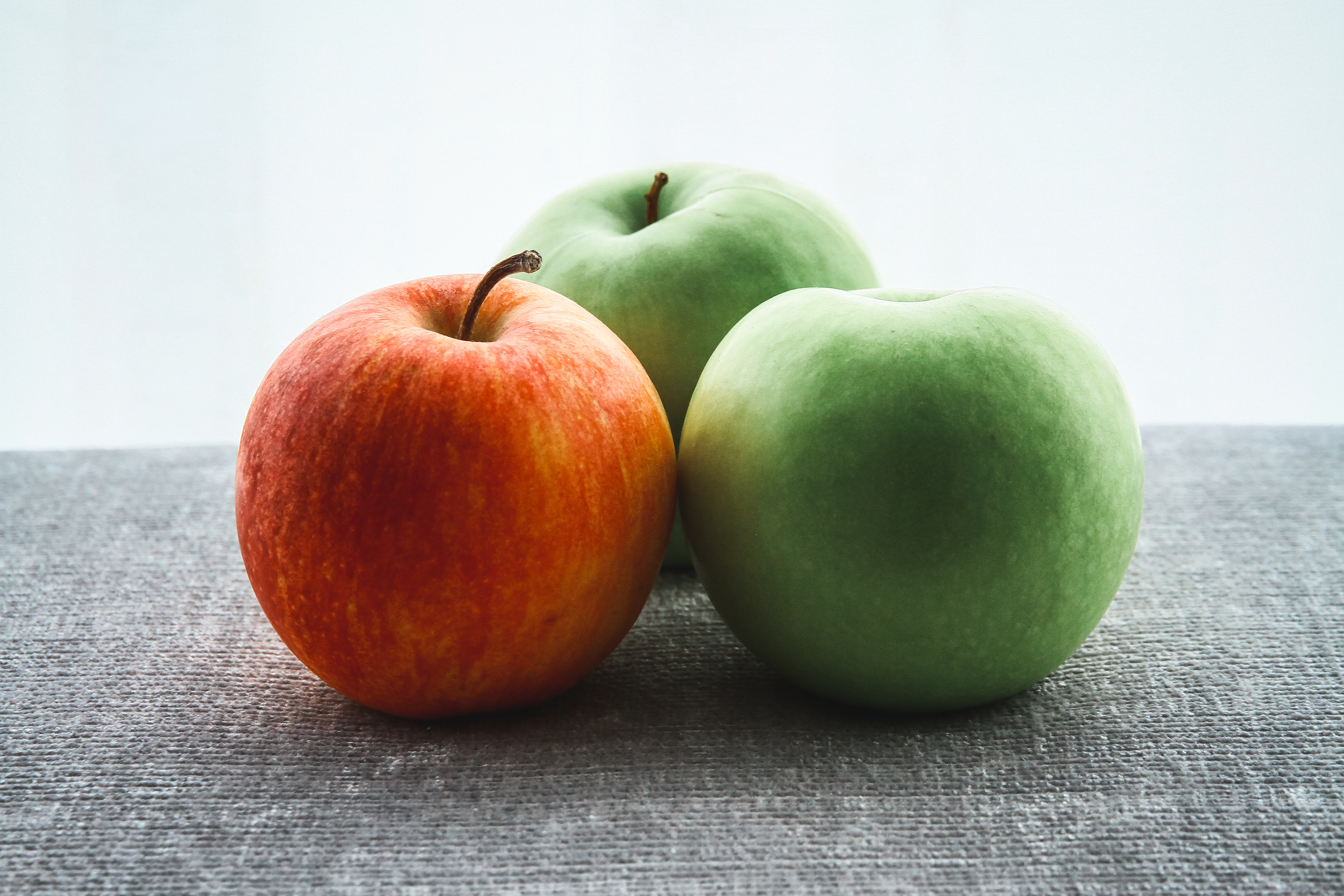
Food for Thought, Day One
Monday, August 26th
1 Corinthians 6:19-20 (NRSV)
Or do you not know that your body is a temple of the Holy Spirit within you, which you have from God, and that you are not your own? For you were bought with a price; therefore glorify God in your body.
Paul wrote these verses to encourage sexual purity among the Corinthians, but when we regard our bodies as precious gifts from God and temples of the Holy Spirit, shouldn’t we honor and care for them in all ways? We are called to be good stewards of this earth and all that God has made- including our physical bodies. When we care for our health, we honor God and what God has generously given us, but we also receive benefits for ourselves! We enable ourselves to live each day with greater wellness, efficiency, stamina, gratitude and joy.
The idea about blogging about self care came from several sources. In recent months several Facebook friends are dieting, exercising, and graciously sharing their journeys. It has been exciting to witness their successes and notice how they are inspiring others. Also, I am listening to an audio book, UnDo It, by Dean (M.D.) and Anne Ornish. I have been fascinated by the different studies that show so many benefits of healthy eating. Our diets affect our personal health and even the health of the world. I share a personal example at the end of today’s blog.
Another reason for this blog is that I have discovered the joys of eating well and caring for my body since my time with cancer four years ago. I cannot know with certainty if a healthier diet regimen is the reason I am still cancer-free, but this I DO know: I feel so much healthier, my quality of life is better, and even if my cancer should one day return, I am grateful to have enjoyed this new way of living. My digestive tract has especially benefited with increased regularity and less gas or bloating. (My family is grateful. 😀 ) But I also feel more energetic, more appreciative of my food, and more mindful of what I am consuming. This sense of gratitude is also beneficial for health!
If you’re interested in changing your diet, I encourage you to read books on diet and health to find a good fit for you. (My particular diet is at the end of this blog.) Changing our diets and ways of living can be difficult! Here are some things I learned along the way that I hope will encourage and help you.
~Understand that beginning is the hardest part. The initial start-up purchases and preparations, the feelings of self-pity and sacrifice, and the lack of immediate results are challenging hurdles. But you will find it gets easier as you keep going! Your regimen will eventually become your natural way of being, especially when you begin to see and feel results.
~Some suggest that we begin gradually, cutting out unhealthy choices a little at a time. This is better than doing nothing, but I suggest doing as much of your healthy diet plan as possible so you feel the benefits sooner. Tell yourself that you will consistently and thoroughly follow a plan for just a few weeks or a month, so that you won’t feel so overwhelmed. By the end of that time, you will most likely want to keep going!
~Initially feeling sorry for ourselves is natural. When I decided to change my diet with the hope of staying cancer-free, I wrestled with the idea that if my cancer returned, I would regret not enjoying myself with all of my favorite treats. Over time, I have discovered that the enjoyment I feel in nourishing my body with nutritious foods is greater than the joy of a temporary taste. There is a spiritual and physical joy in tending my body that blesses me so much.
~Consider saturation points. How much of a good thing do we really need in order to be satisfied? How much joy does each additional bite bring? Keep paring down portions. One bite of a sweet treat can be mindfully relished, savored and appreciated, perhaps even more than a larger portion.
We generally focus on our souls, spirits and minds when we think of our spirituality. And yet, our holiness includes our whole selves- our “wholiness” as I have seen it described. If you have been longing to make some healthful changes, I hope you find encouragement today. (Please be sure to check with your doctor before making big changes.)
See you tomorrow!
Photo by Benjamin Wong on Unsplash
~Here is one personal example of how healthy food benefits us. After my chemotherapy regimen, I was given infusions of Avastin for about nine months. I don’t understand all of the science, but Avastin helps prevent cancer cells from creating new blood vessels which feed tumors. One of the side effects of Avastin is high blood pressure. (One of my chemotherapy friends was hospitalized because hers was so high.) Interestingly, I didn’t have the high blood pressure until a few months after I had finished. I went to the hospital with terrible headaches and was treated with blood pressure medicine for a few months. Once the Avastin cleared my system, my blood pressure dropped to its normal (low) reading.
The Ornishes write that antioxidants work much the same way as Avastin! Foods high in antioxidants work to prevent cancer cells from creating new blood vessels. I was nervous about stopping the Avastin, but now I know I am “continuing treatment” by eating strawberries, blueberries and other colorful fruits and vegetables. I enjoy this delicious “medicine” and its benefits- with NO headaches!
Karen’s diet:
My diet consists largely of fruits, vegetables, beans and nuts. I don’t eat beef or pork, and very little chicken or turkey (about one serving per week). Studies show dairy products to be unhealthy, but I do use milk for my coffee (with a little Truvia) and eat cheese and plain Greek yogurt. Jim and I avoid sweets (desserts, baked goods, candy) and processed foods as much as possible. Fruits have become my sweet treats. At Christmas I allow myself cookies for a few days, and about once a summer I have ice cream for a special occasion. We have a purified water cooler with a monthly delivery service. I don’t drink alcohol but find that fizzy sparkling water satisfies well. The processed snacks I enjoy are Triscuits and whole wheat tortillas. Ezekiel English muffins are excellent and I have baked our own bread. I am working to avoid the white breads offered at restaurants but this has been challenging (I do feel so bloated when I eat them). Natural peanut butter is delicious. I take once-daily vitamins, probiotics, and a capsule of turmeric (which has been shown to help prevent cancer).
Next Blogs Are Currently in Progress

Dear Readers,
I am currently preparing a week-long devotional series based on different thoughts about food and eating! I hope you’ll return next Monday. Thanks!
(Photo credit: Photo by Hal Gatewood on Unsplash)

